
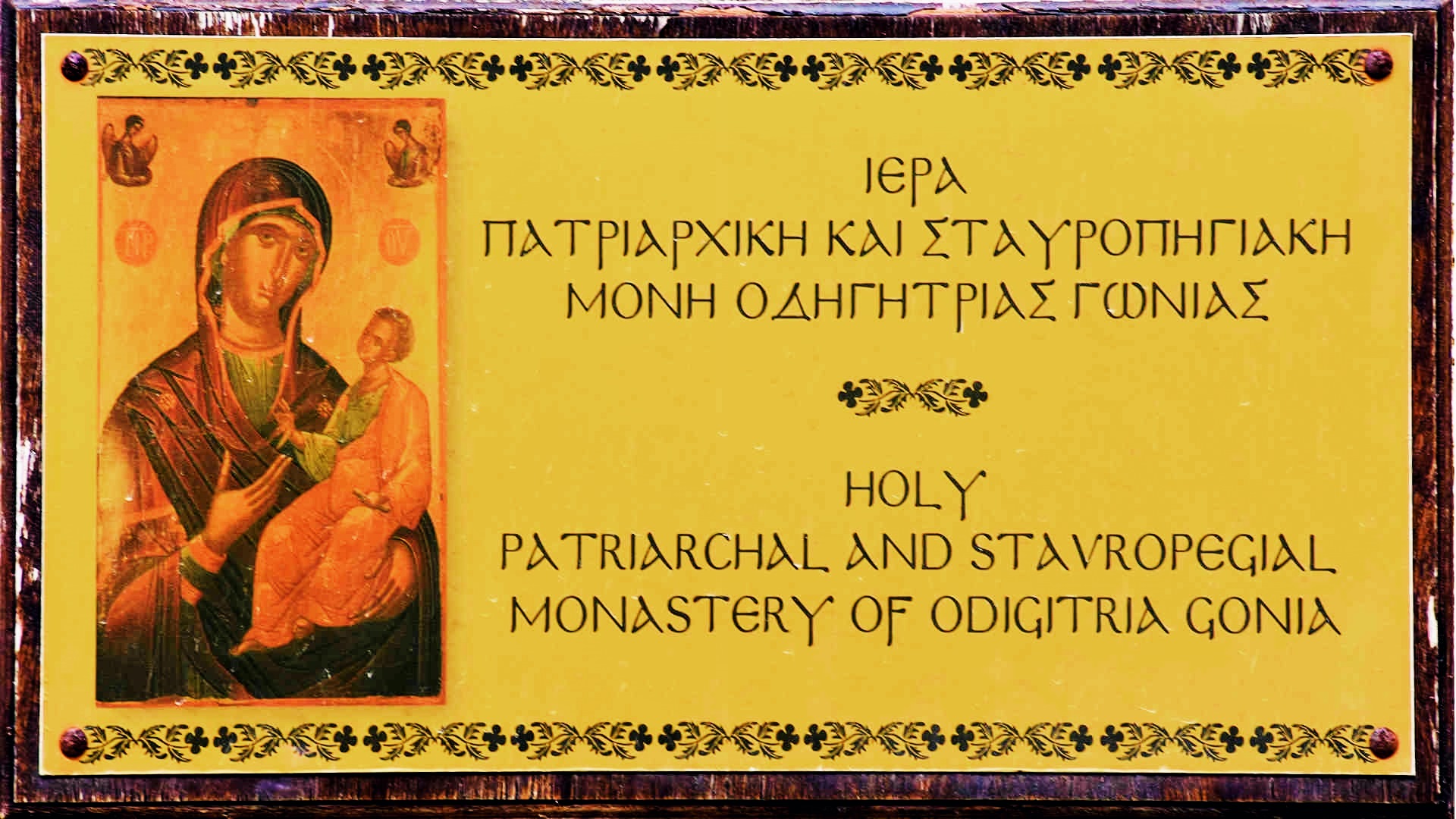
GONIA ODIGITRIA MONASTERY
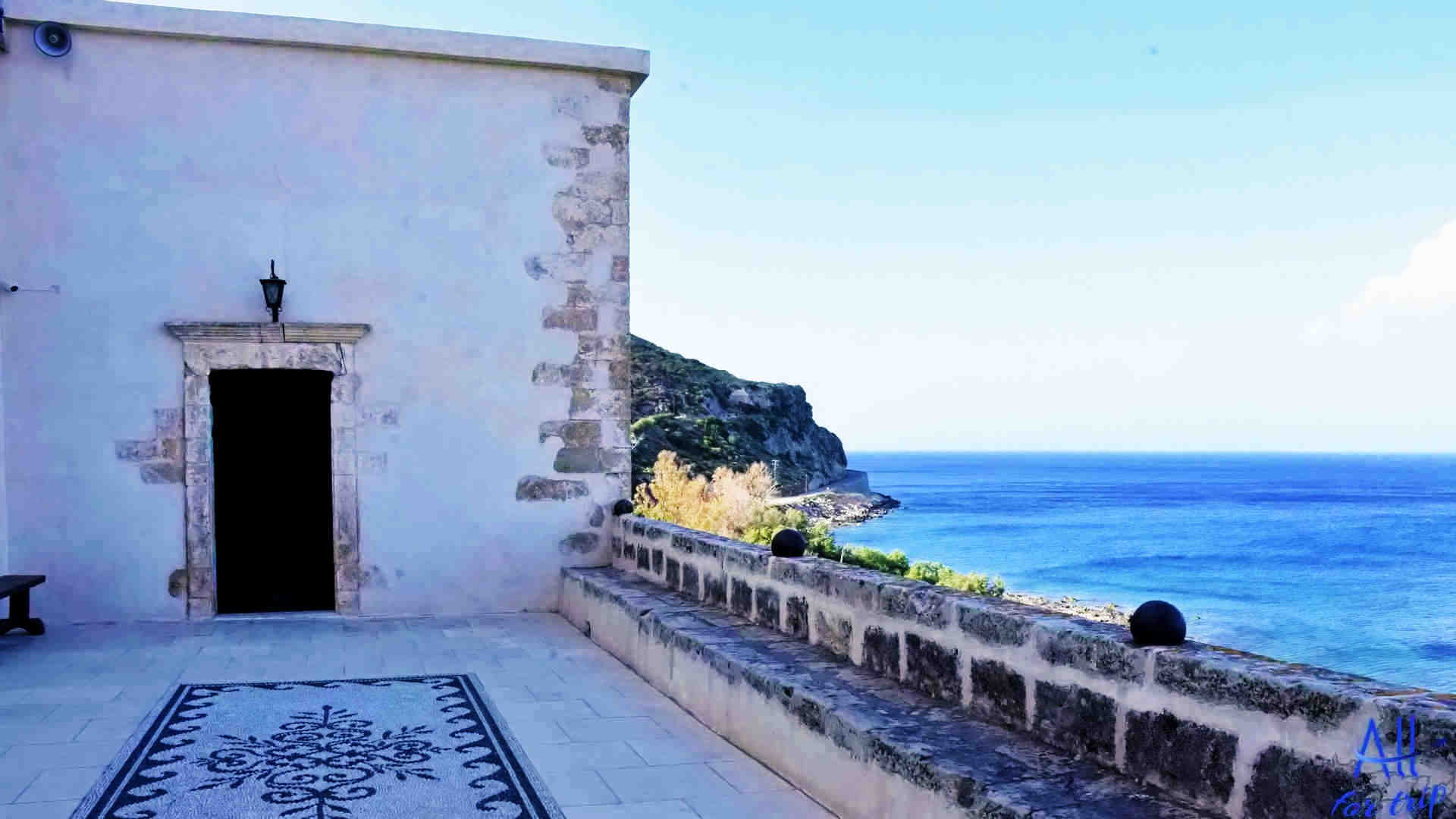
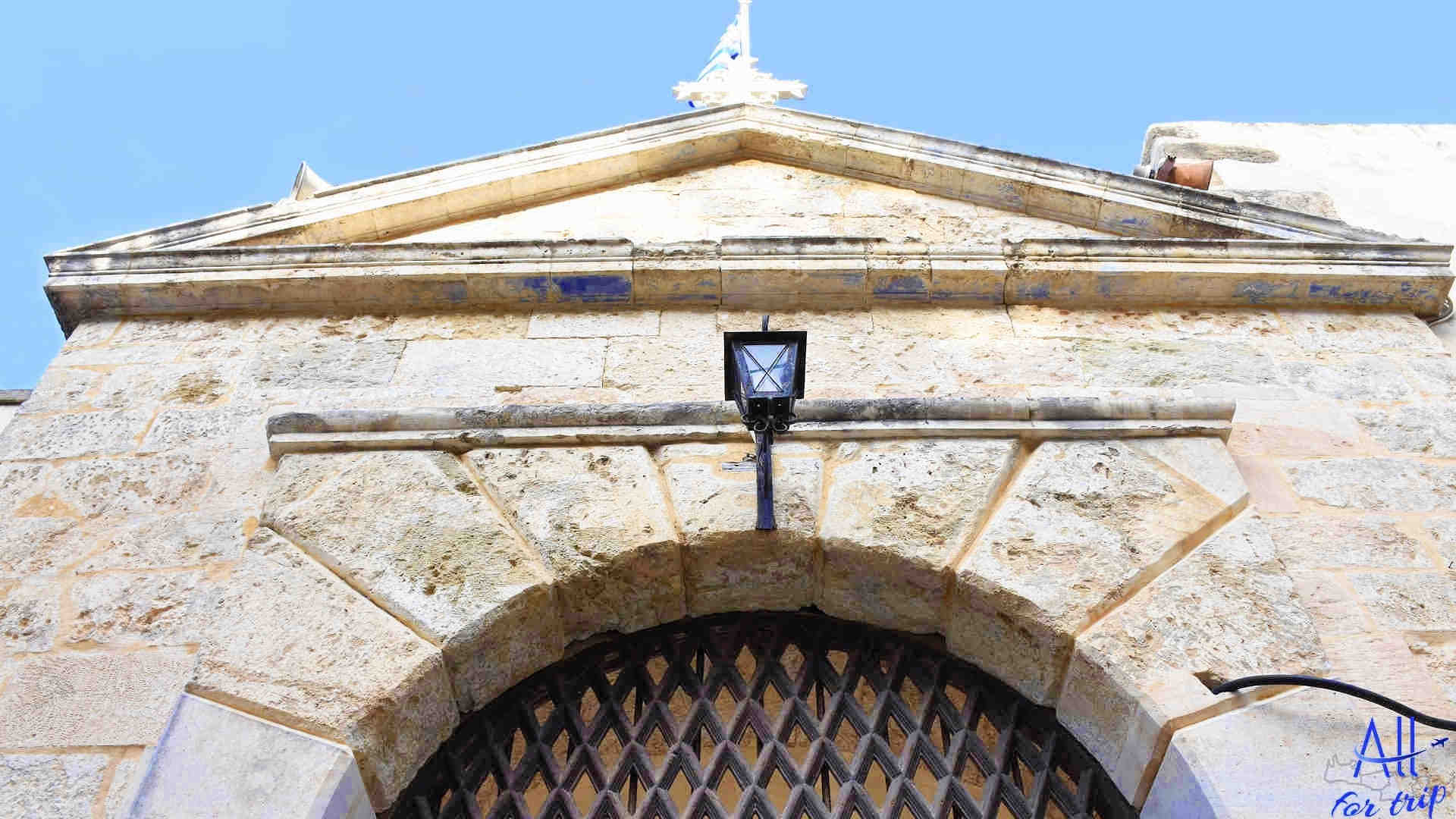
Gonia Odigitria Monastery, also say Monastery of Our Lady of Gonia, or Lady of the Angels Monastery of Gonia – is an orthodox monastery on the Spatha Peninsula – on the seaside.
The monastery has a unique view: the bay of Chania.
Gonia: in English language: Corner – it was given this name, because is located on the edge of the Gulf of Chania.
From Kolymvari only 2 km – 26.8 km from Chania Venetian Port and 16.7 km from Kissamos.
[swpm_protected format_protected_msg=”1″]GPS is very important! – because no street names in Western Crete.
GPS: 35.550205, 23.776810[/swpm_protected]
Opening Times:
in summer: daily from 9:00-1400 and from 16:00 – sunset
in winter: daily from 9:00-1400
Entrance fee: 2 euro
Tel. of the monastery: 28240-22281
The History of the Gonia Odigitria Monastery
9th century – according to archaeological finds: the monastery was built by hermits on the ruins of the ancient church of Artemis Vritomartis (Diktynna) in this period – originally in honor of St. George
– the building complex was constantly threatened by attacks by pirates
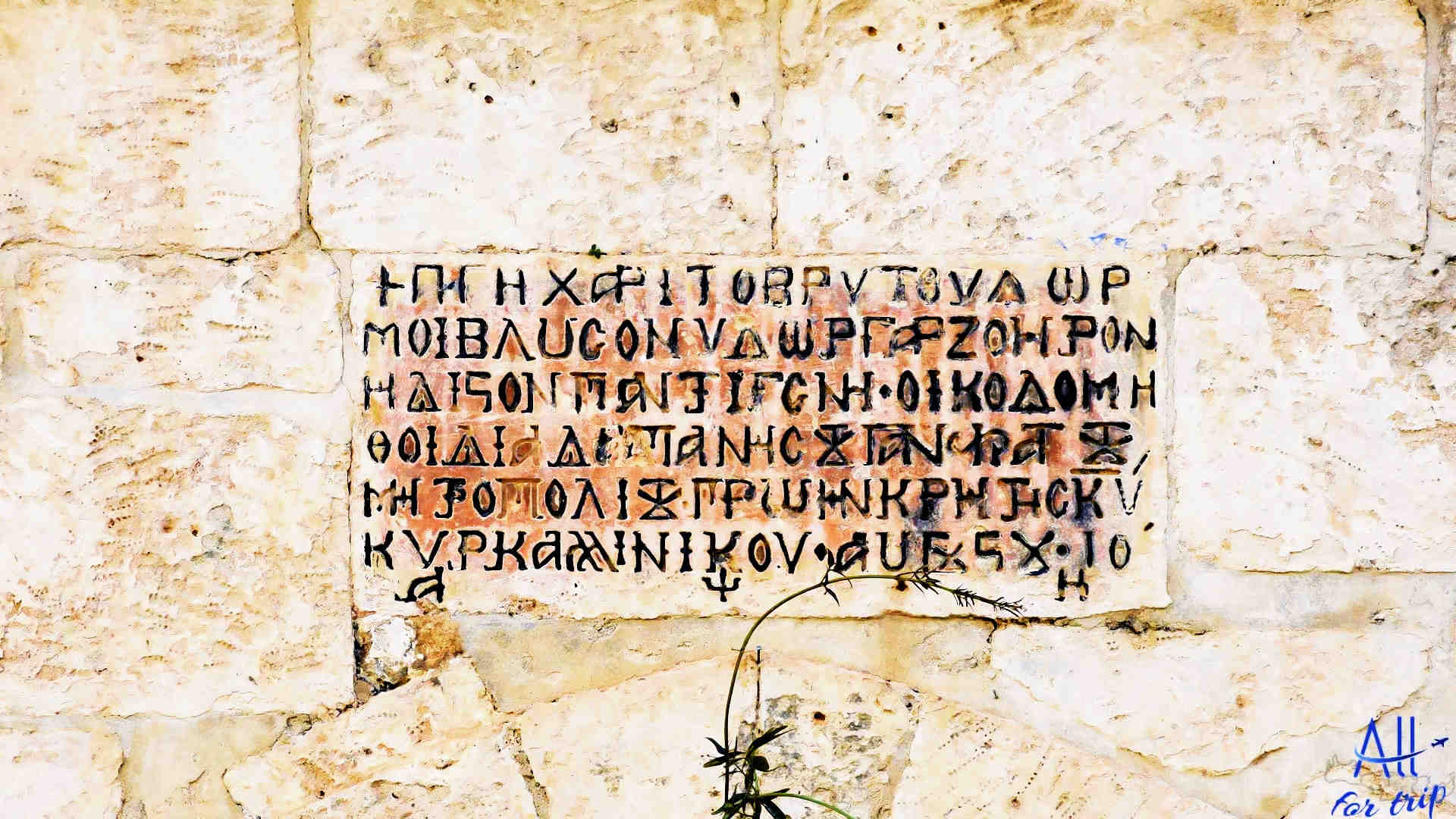
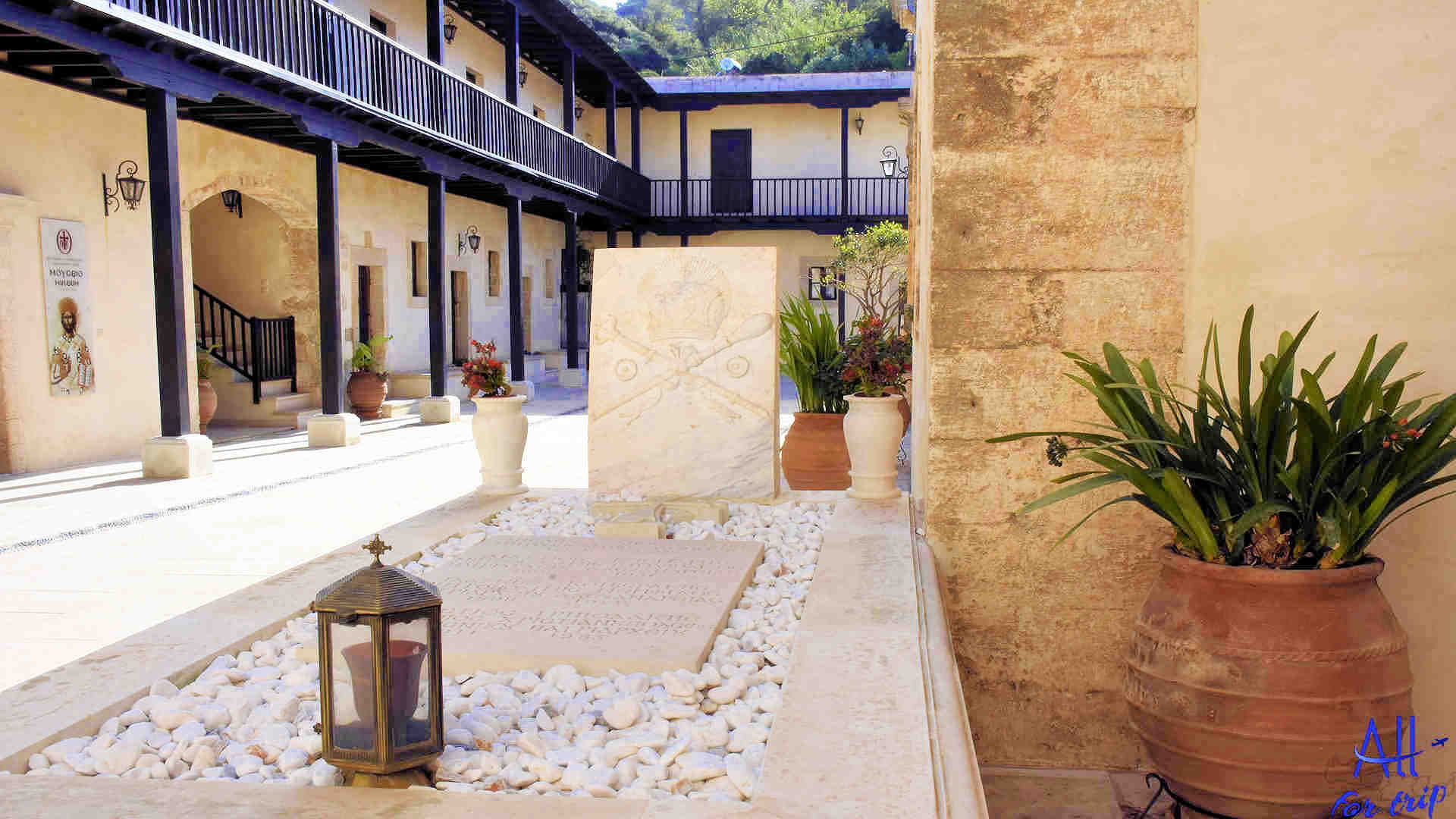
13th century – according to excavations: the monastery was rebuilt. The monastery complex you can see today is located next to a burial site. The remains of the original 13th-century church are below the burial site.
1618 – Vlassios founded the monastery, which we see today
– monk Venedictos Tzagarolοs continued to manage the works
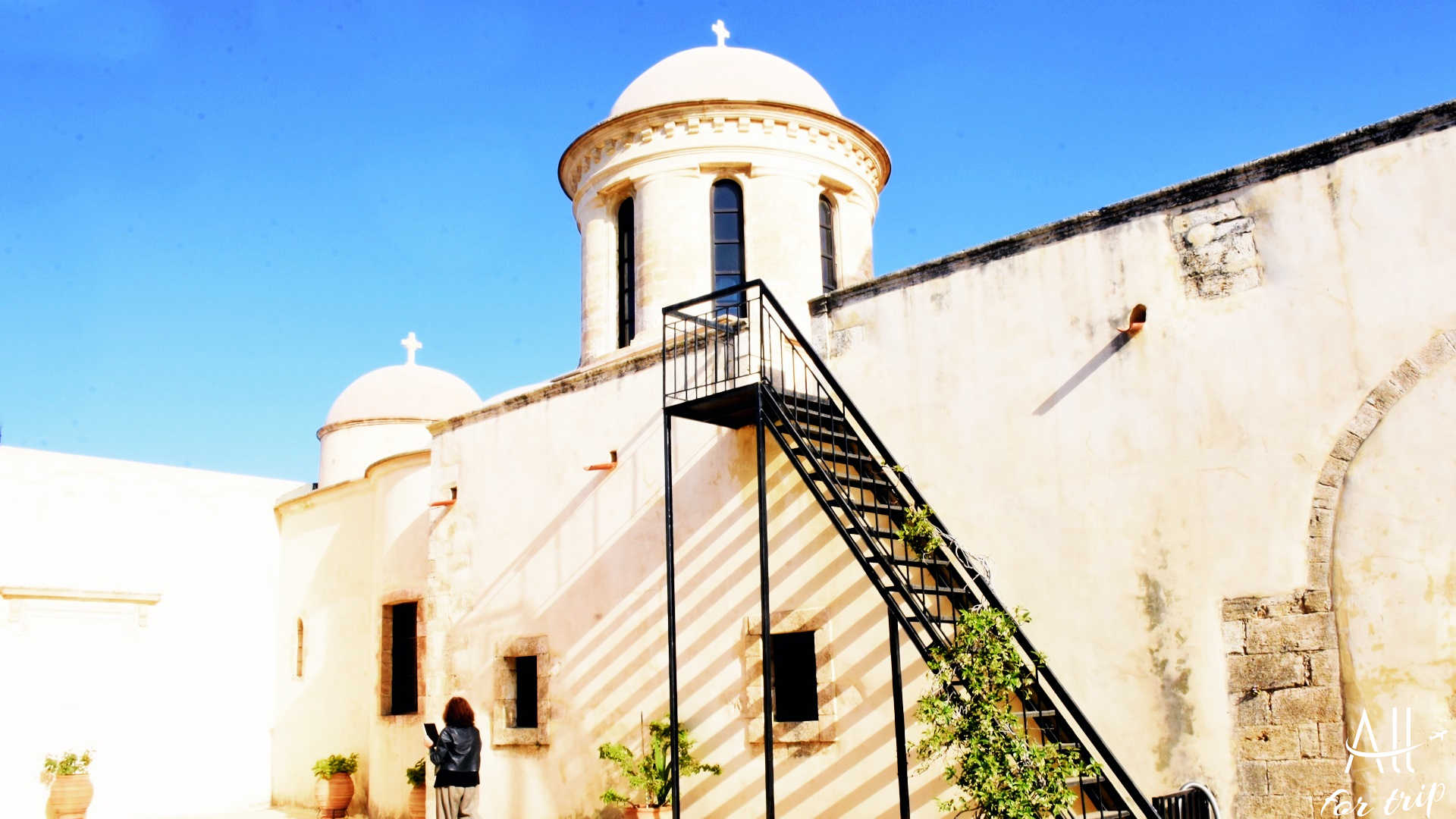
– the reconstruction was done in Venetian style
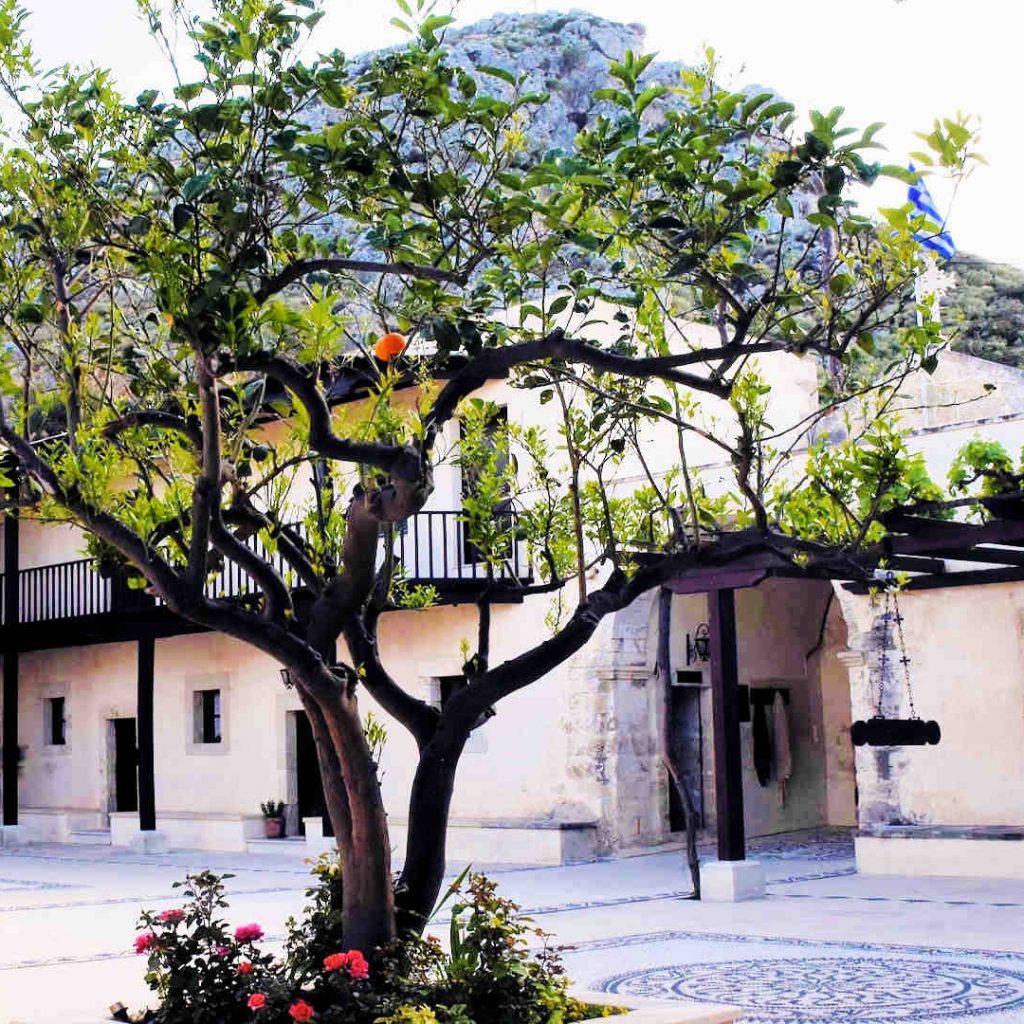
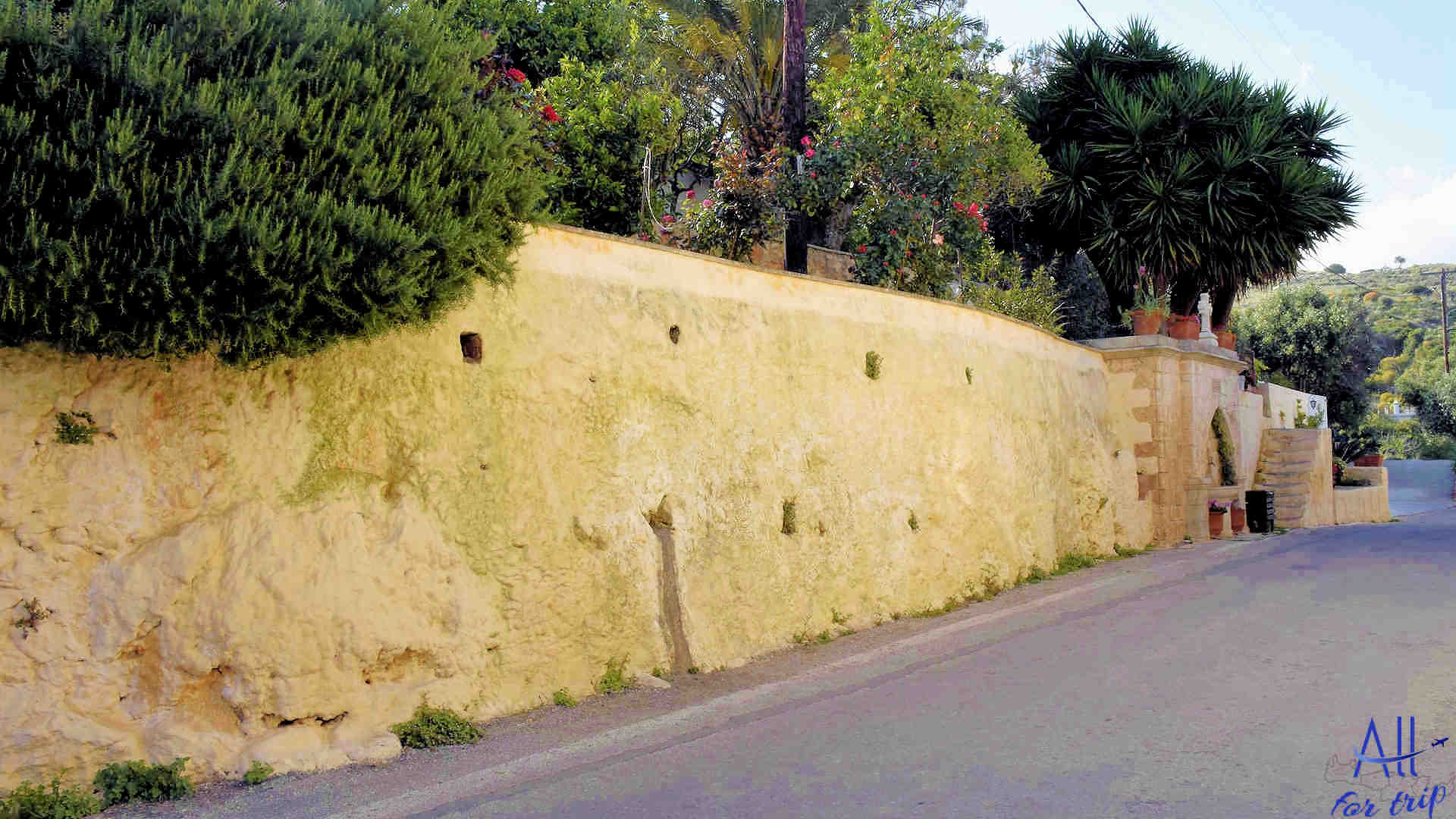
– the complex is surrounded by a high wall, similar to the fortresses of Venice
– the Gonia Monastery is a Venetian-style fortress monastery
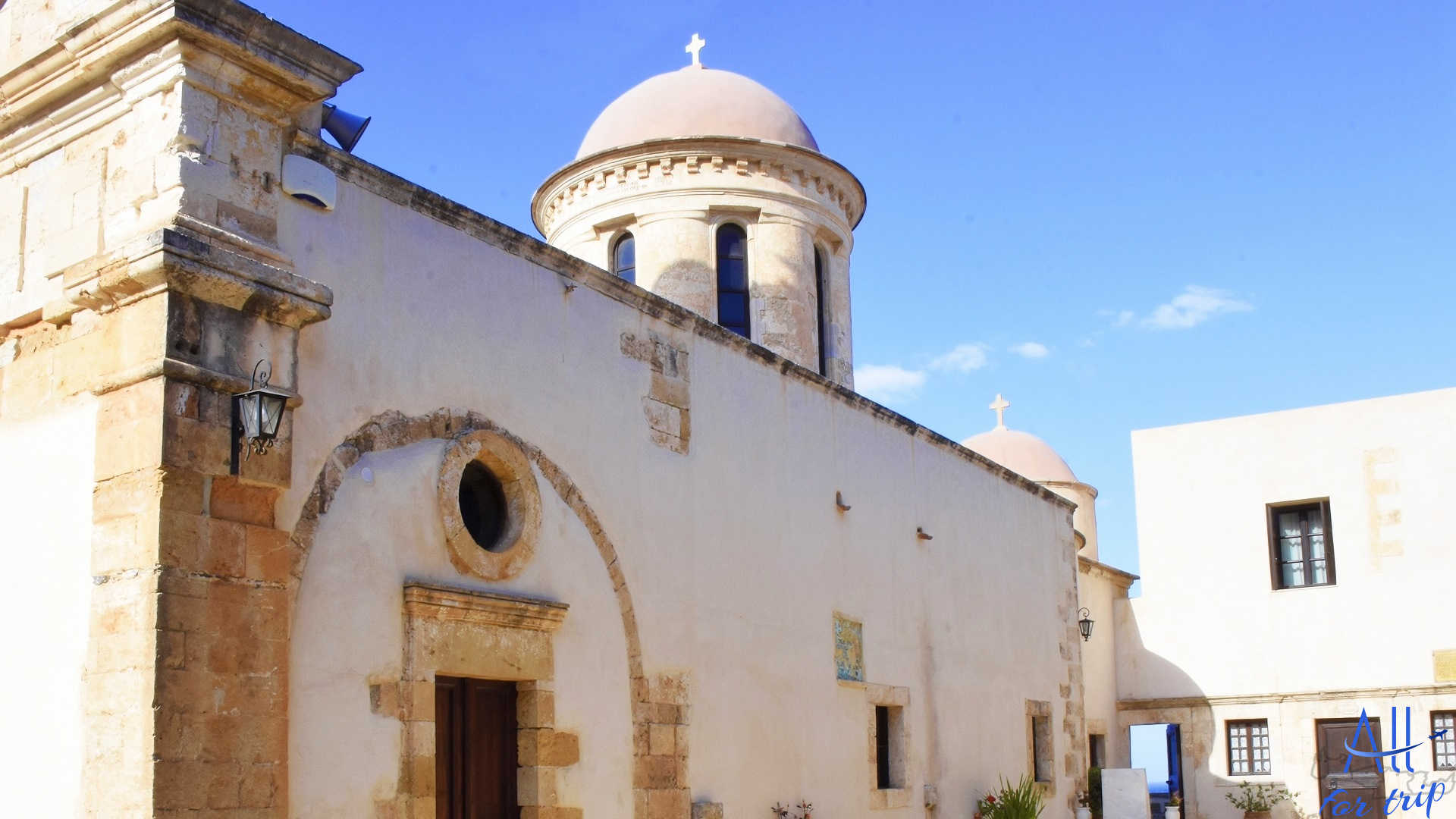
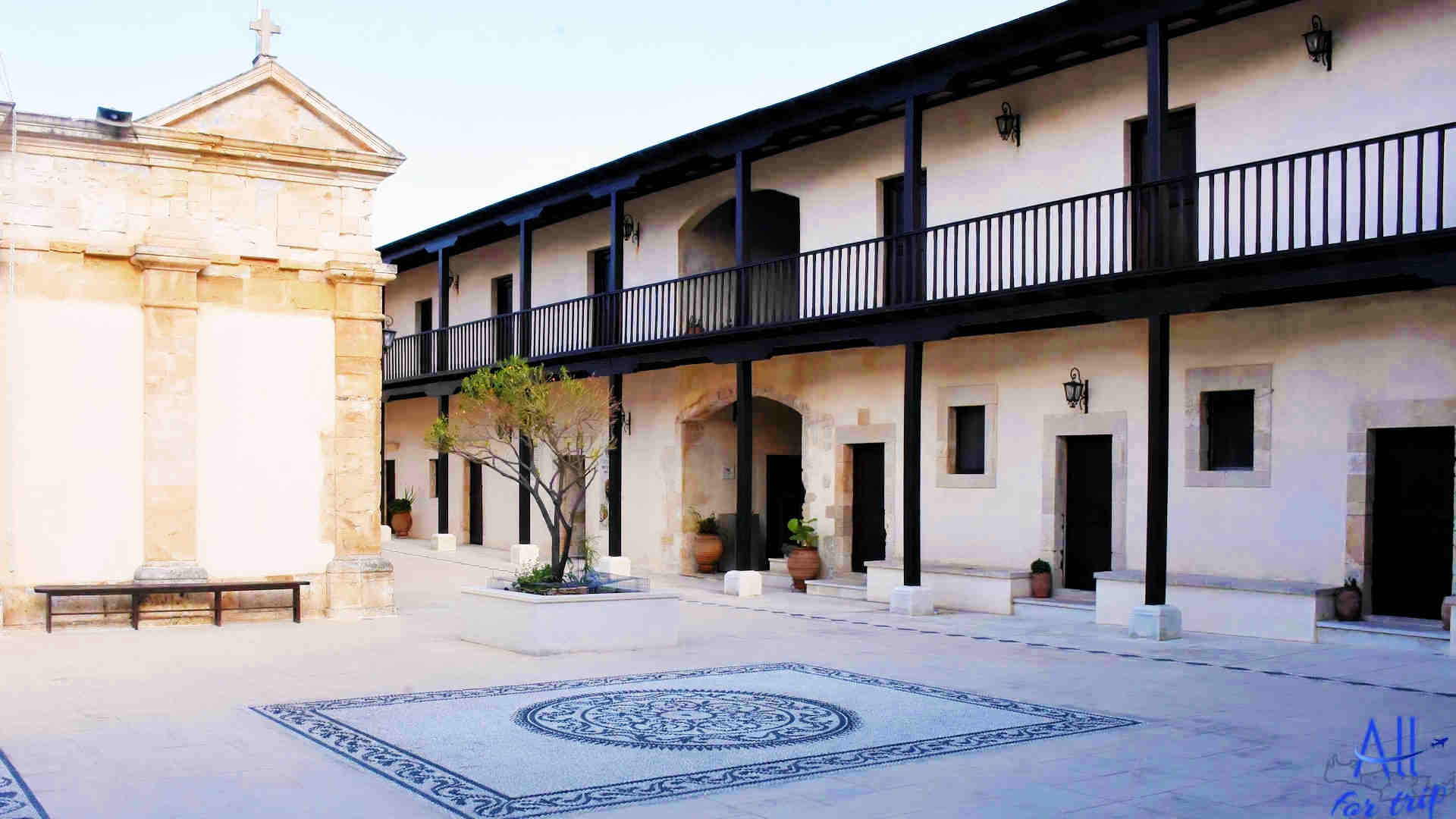
1634 – the church of the monastery is completed – consecrated to the Assumption of Virgin Mary – feast of this event: 15. August
– major attacks on the monastery: among others in 1645, 1652
1662 – the patriarch placed a cross in the foundations of the church, therefore it became a stauropegion monastery – the Ecumenical Patriarchate took control
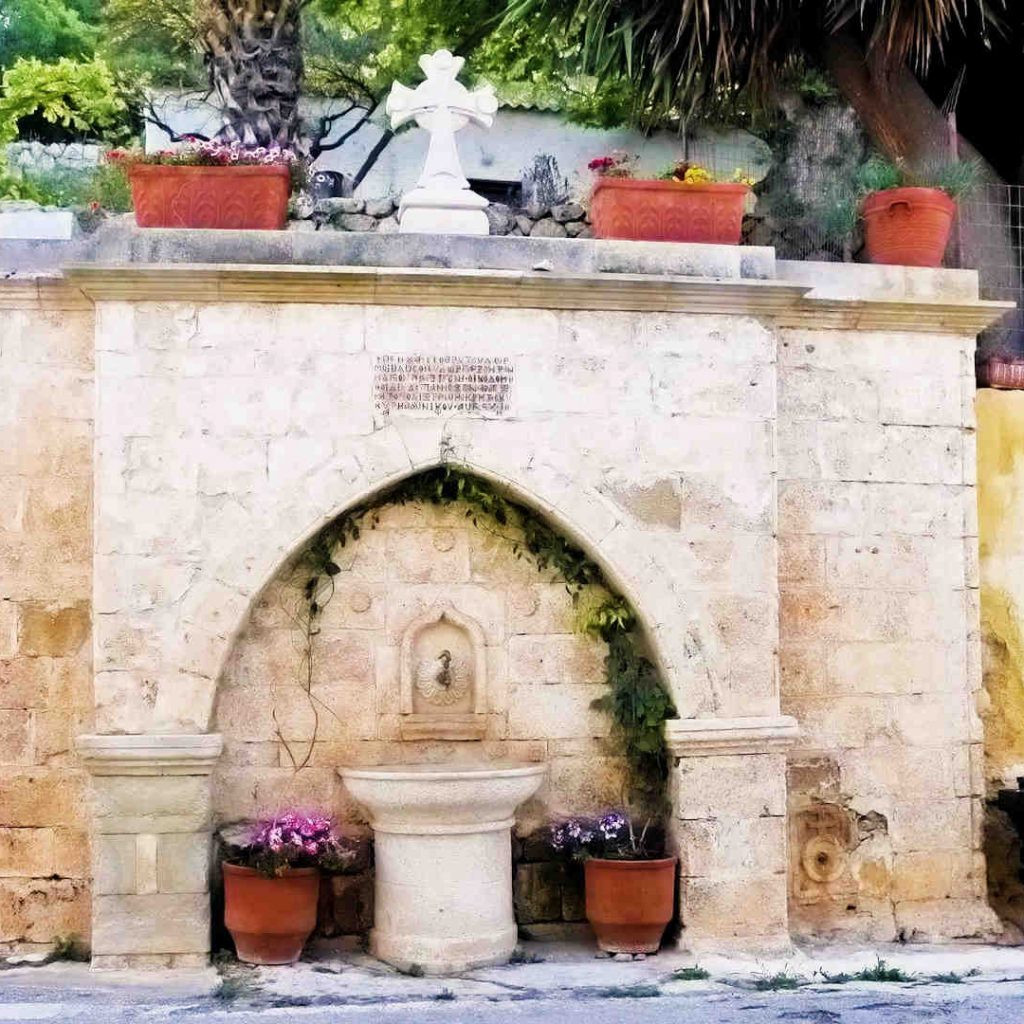
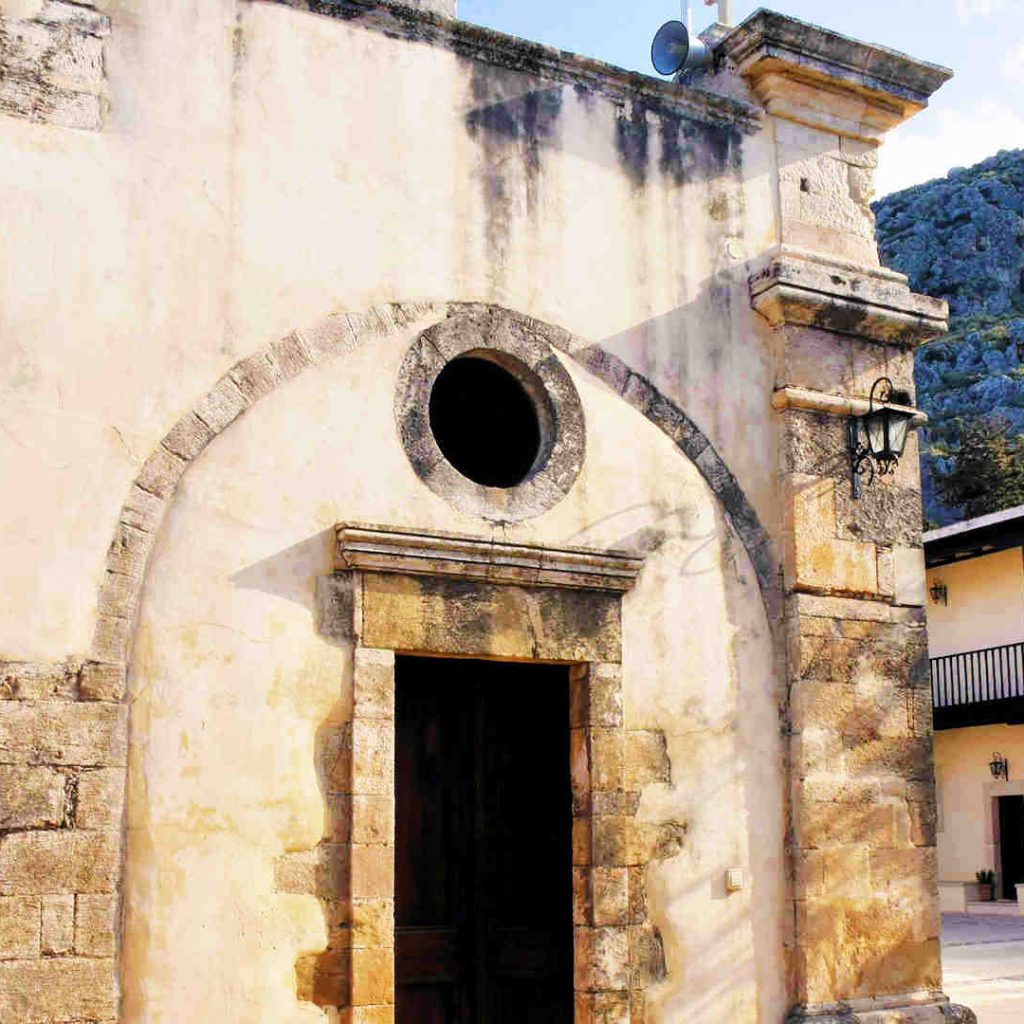
1708 – the fountain, which can be seen in front of the entrance, is completed
1805 – the Chapel of St. Nicholas and St. Charalambos is built
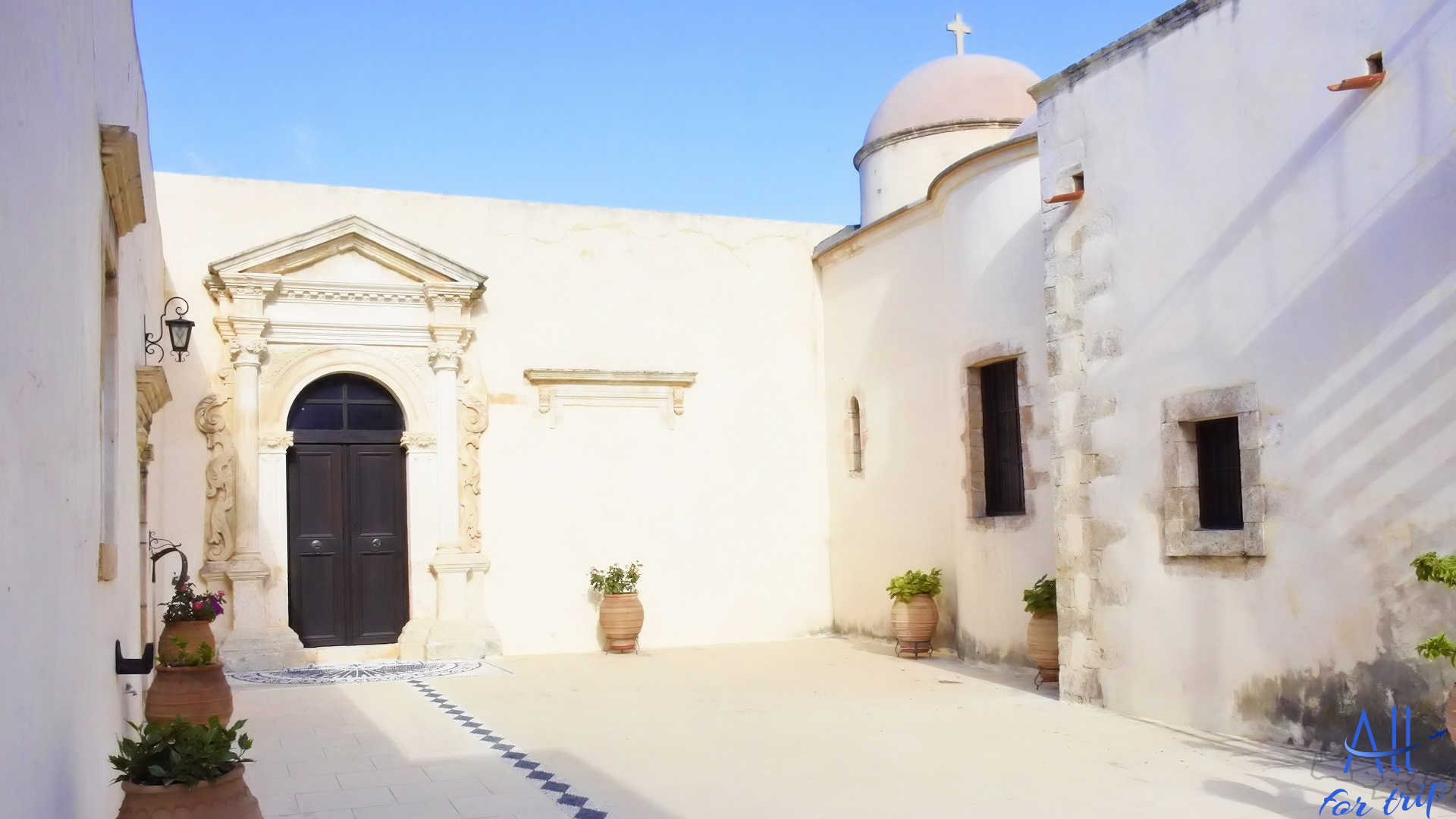
– the narthex was built in the main church – this is a feature of the Byzantine church: the foyer opposite the main altar of the church
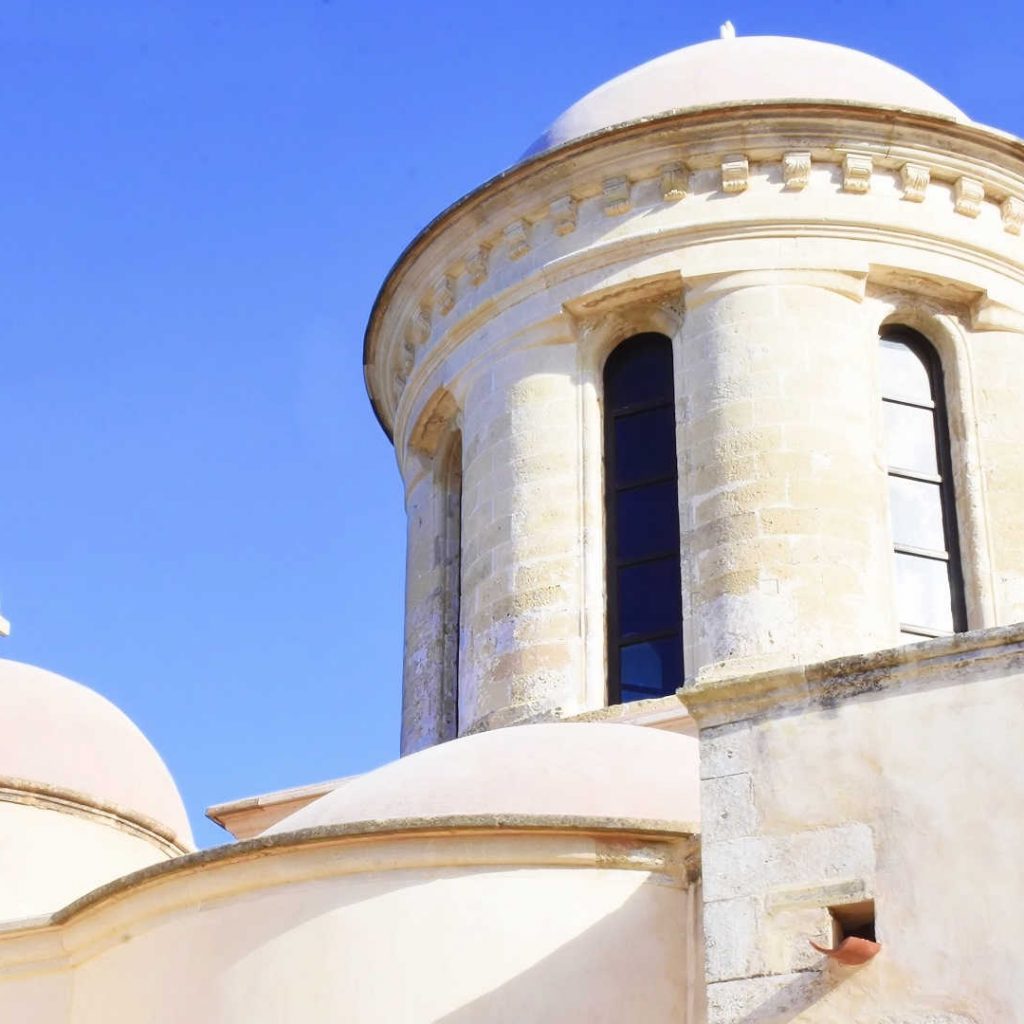
– the dome
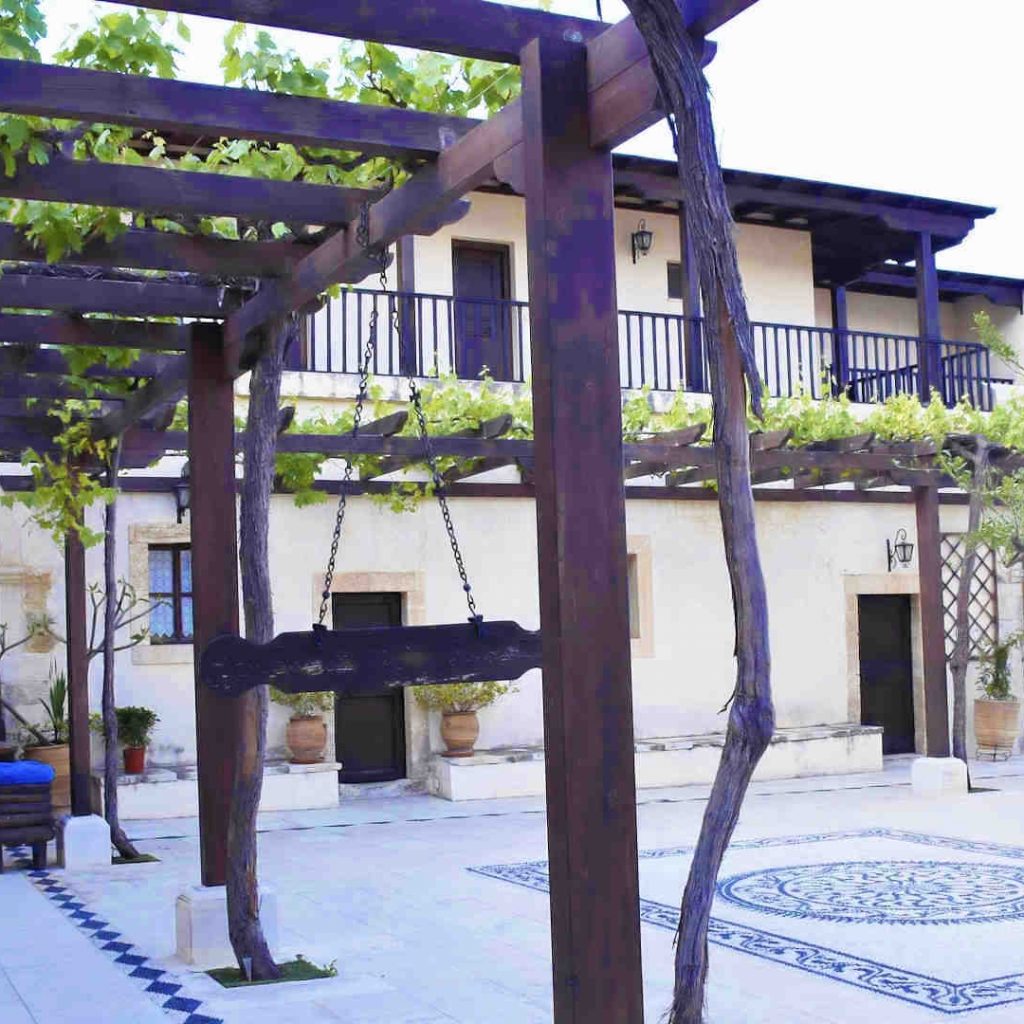
– the area around the court: the abode of the abbot and the monks of the monastery
– during the Ottoman occupation, the monastery of Gonia was a small fortress: a refuge for the rebels. Therefore, it was constantly the target of the conquerors.
[swpm_protected format_protected_msg=”1″]
1821 – part of the monastery operated as a hospital. They helped the to wounded rebels
– the building complex was severely damaged, by Ottoman attacks in 1822 and 1841
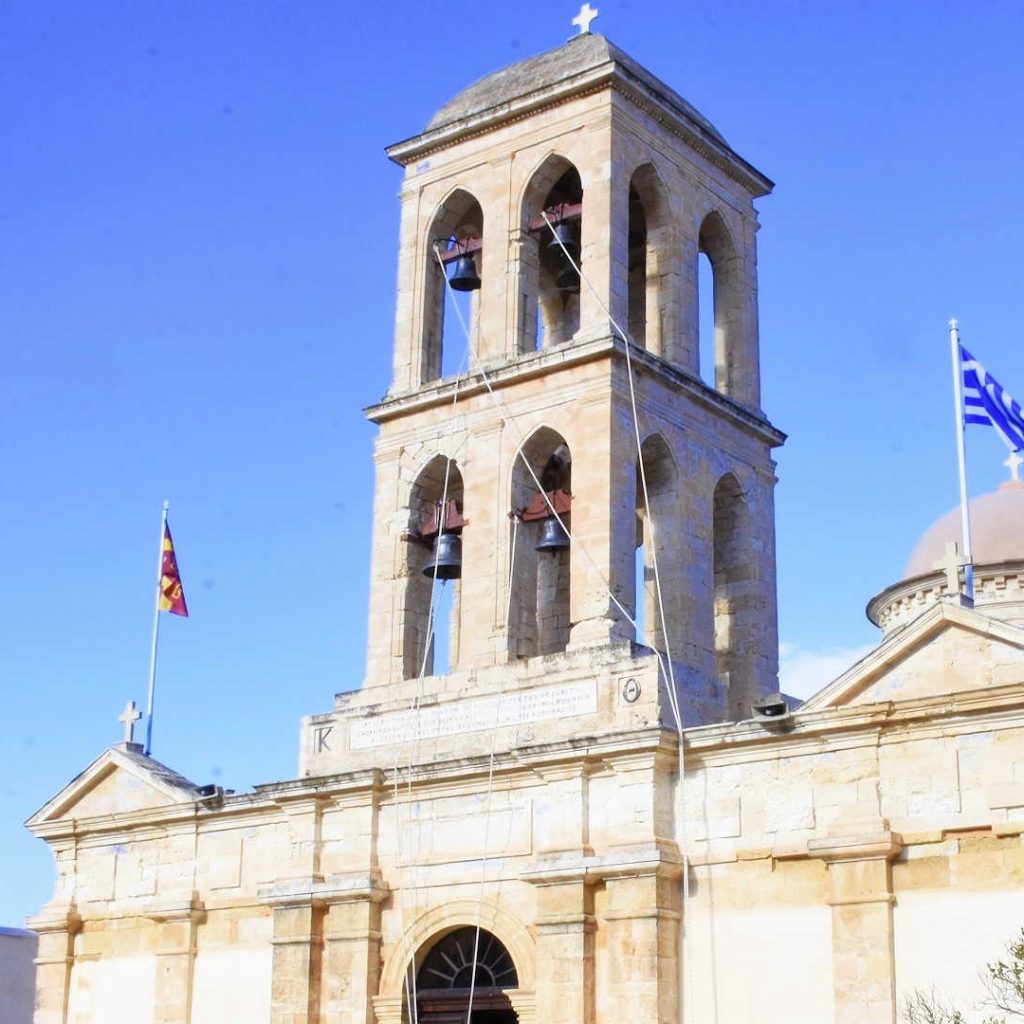
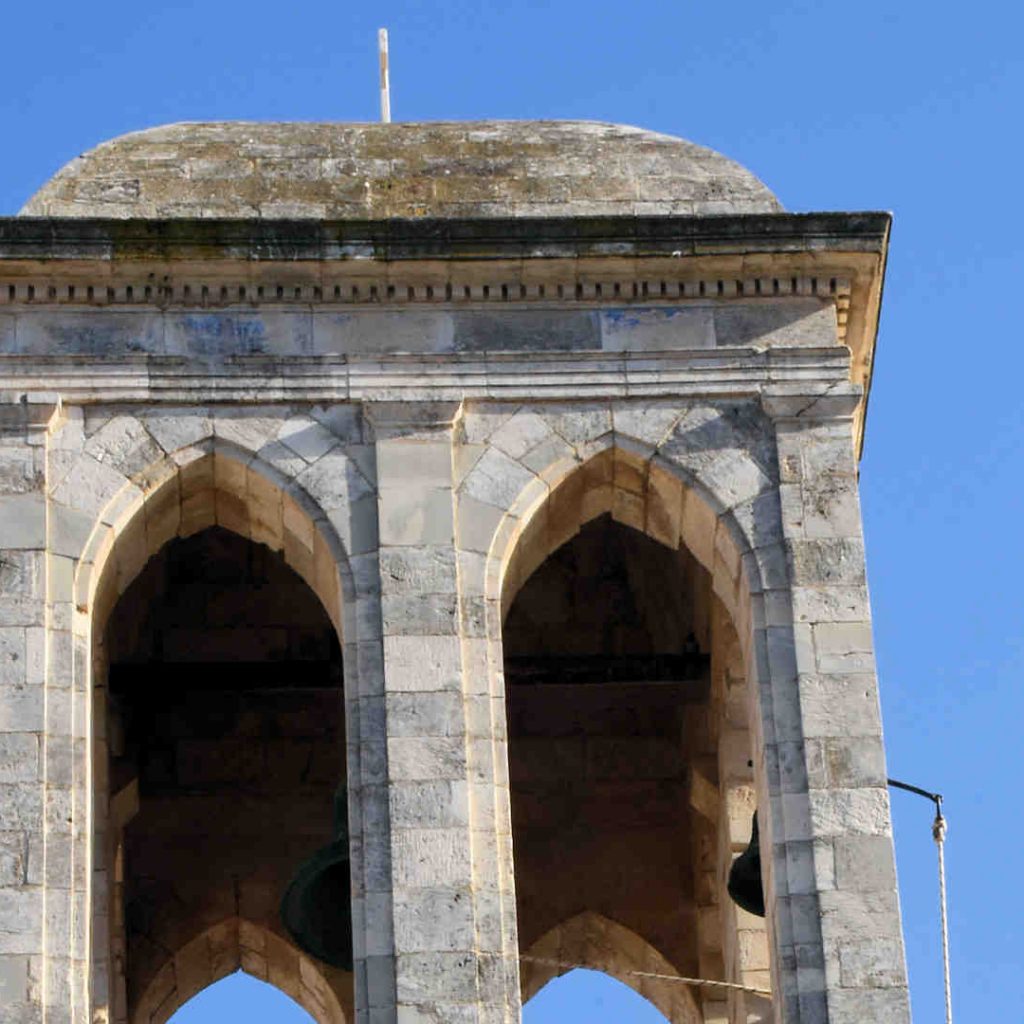
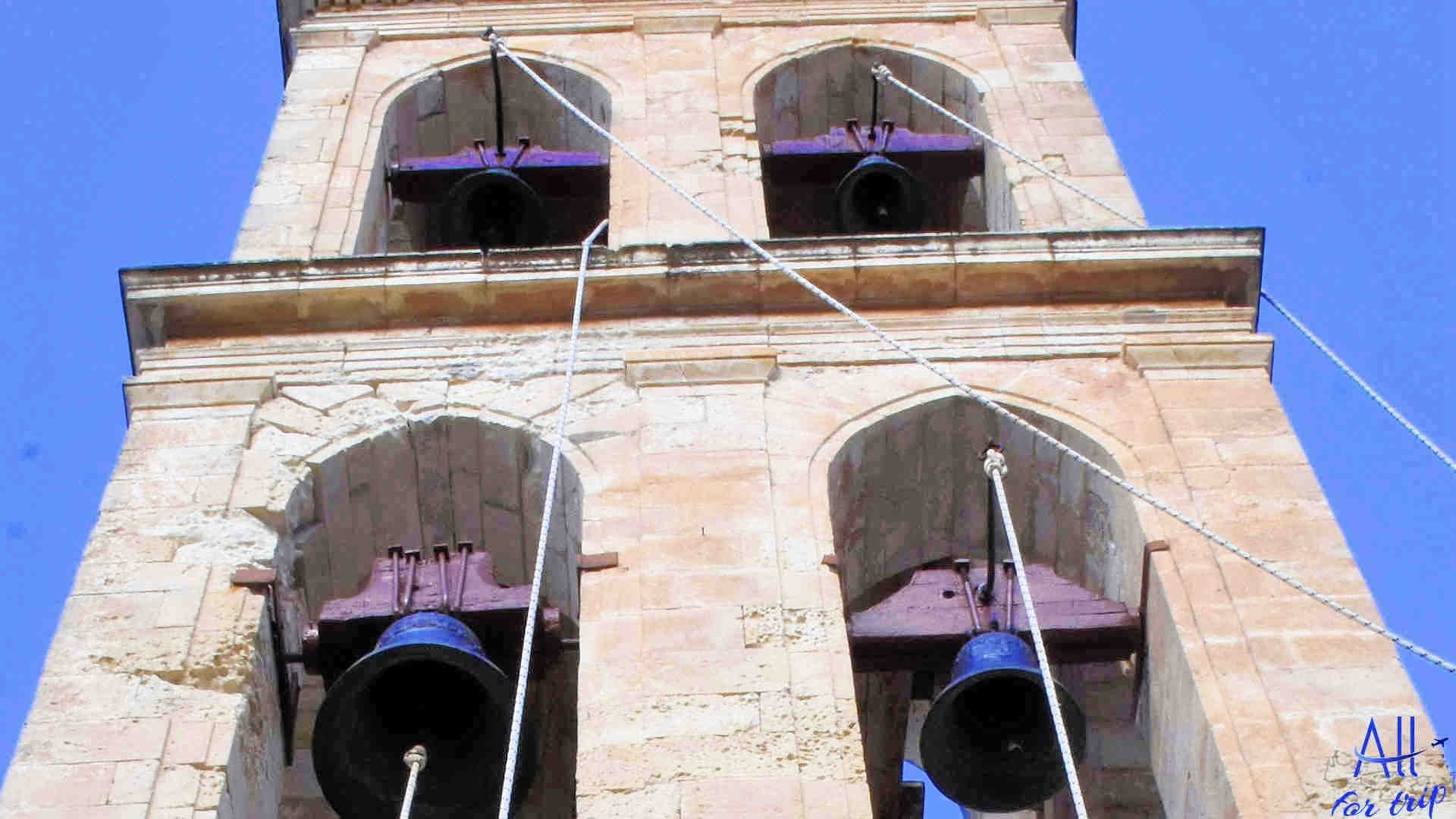
1849 – the belfry was built
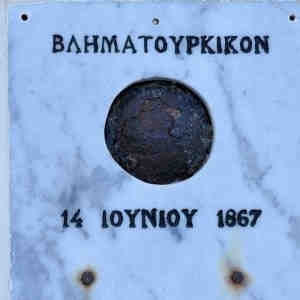
1866-1869 – Cretan uprising against the Ottoman Empire. Proof of cannon attacks: the cannonball! – which can be seen in the wall of the monastery
1897 – it was an important revolution: the last! – before the autonomy of Crete
1899 – the new big bell tower was built, on the site of the old bell tower
[/swpm_protected]
[swpm_protected format_protected_msg=”1″]
During the Second World War:
– it was the seat of local resistance
– provided refuge to Allied English troops
– therefore, the buildings of the monastery were bombed by Nazi German troops
– the monks were imprisoned by German troops
– the monastery was partly destroyed by German bombing
[/swpm_protected]
[swpm_protected format_protected_msg=”1″]
The monastery today:
– the monastery of Gonia plays a crucial role in local religious and social life
– his monks serve the religious and spiritual needs of the people in many villages
– the monks teach in local schools
– helps to develop facilities in the Kolymvari region
– assisted in the establishment of the Orthodox Academy of Crete
[/swpm_protected]
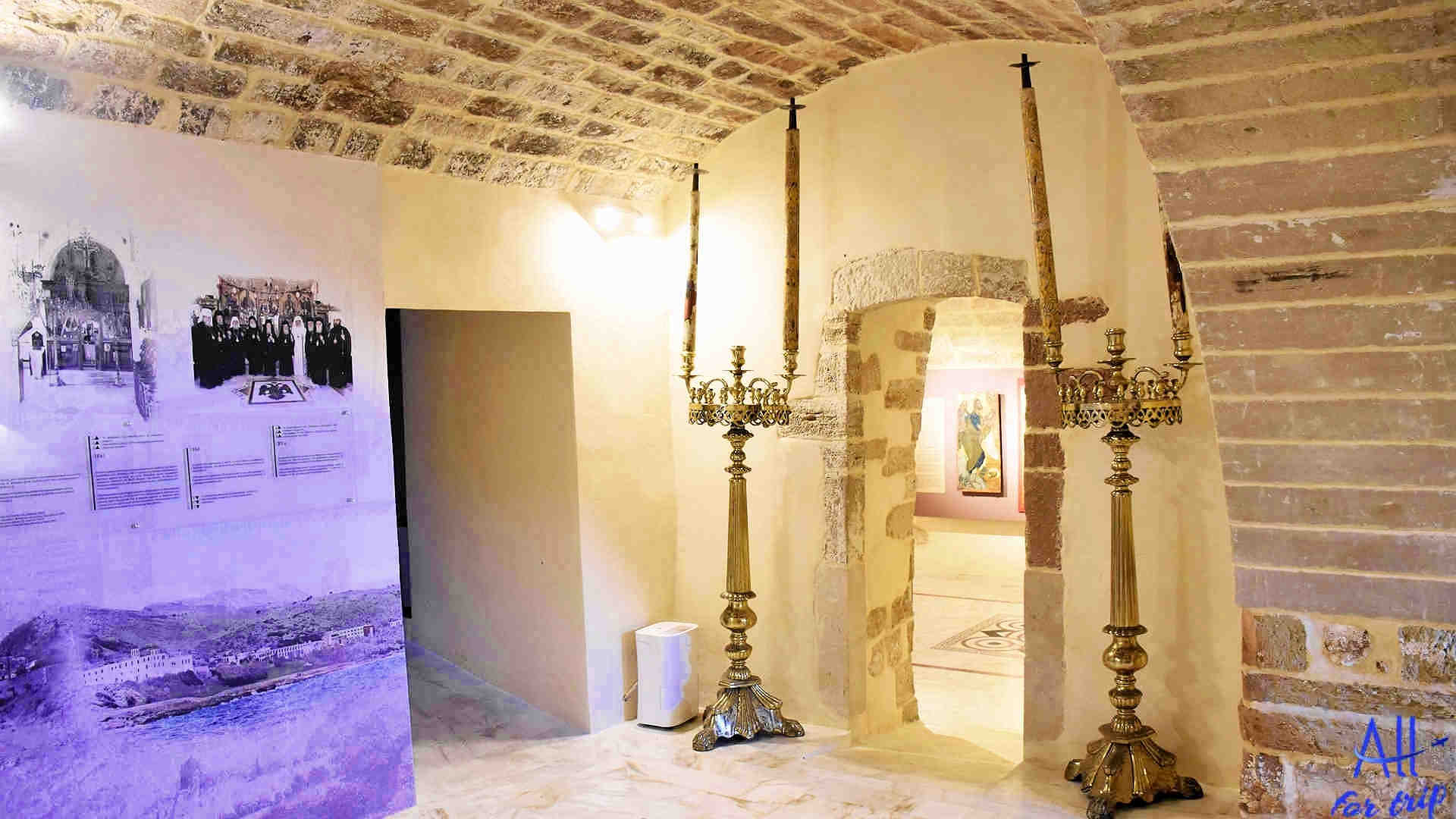
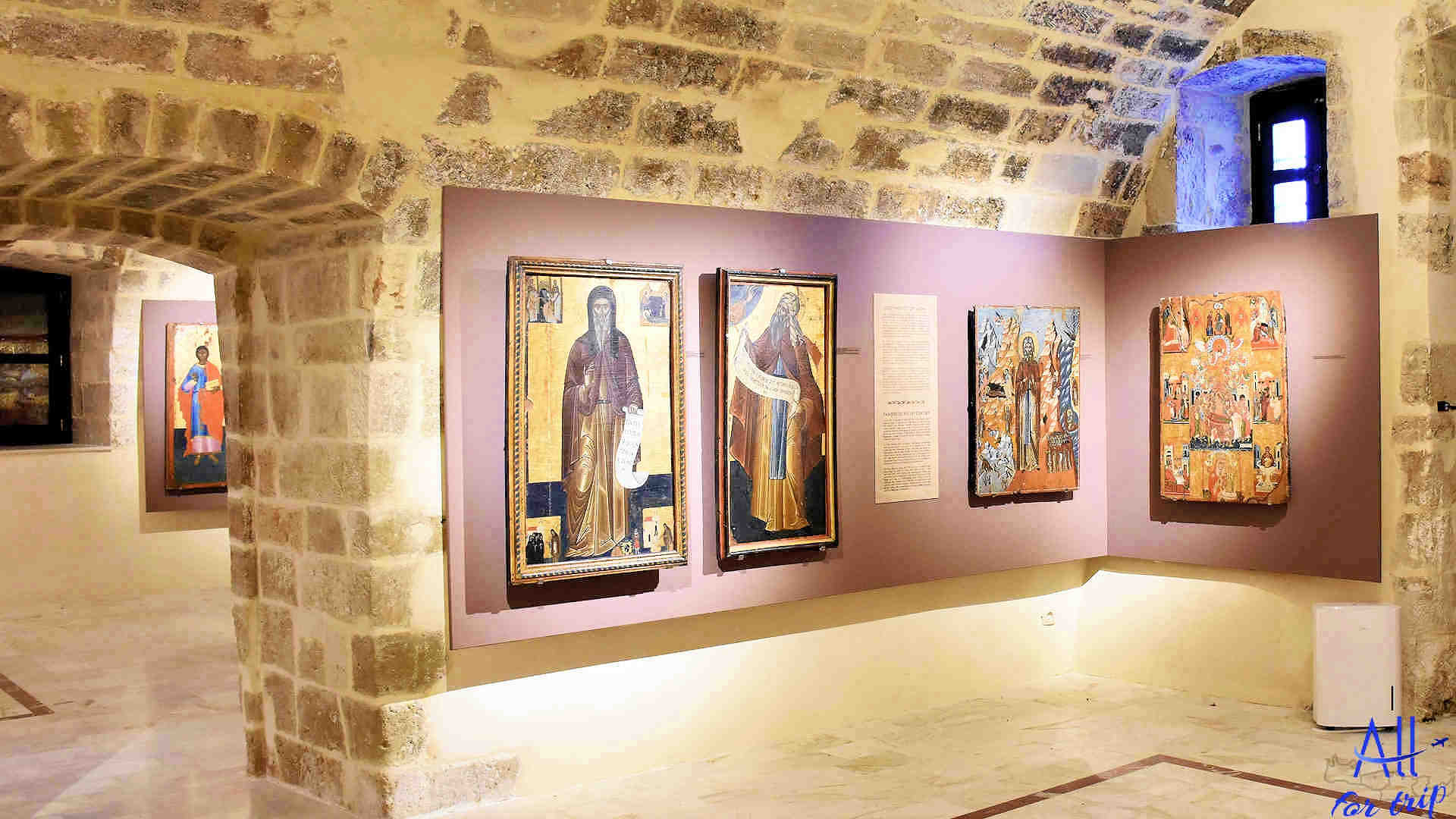
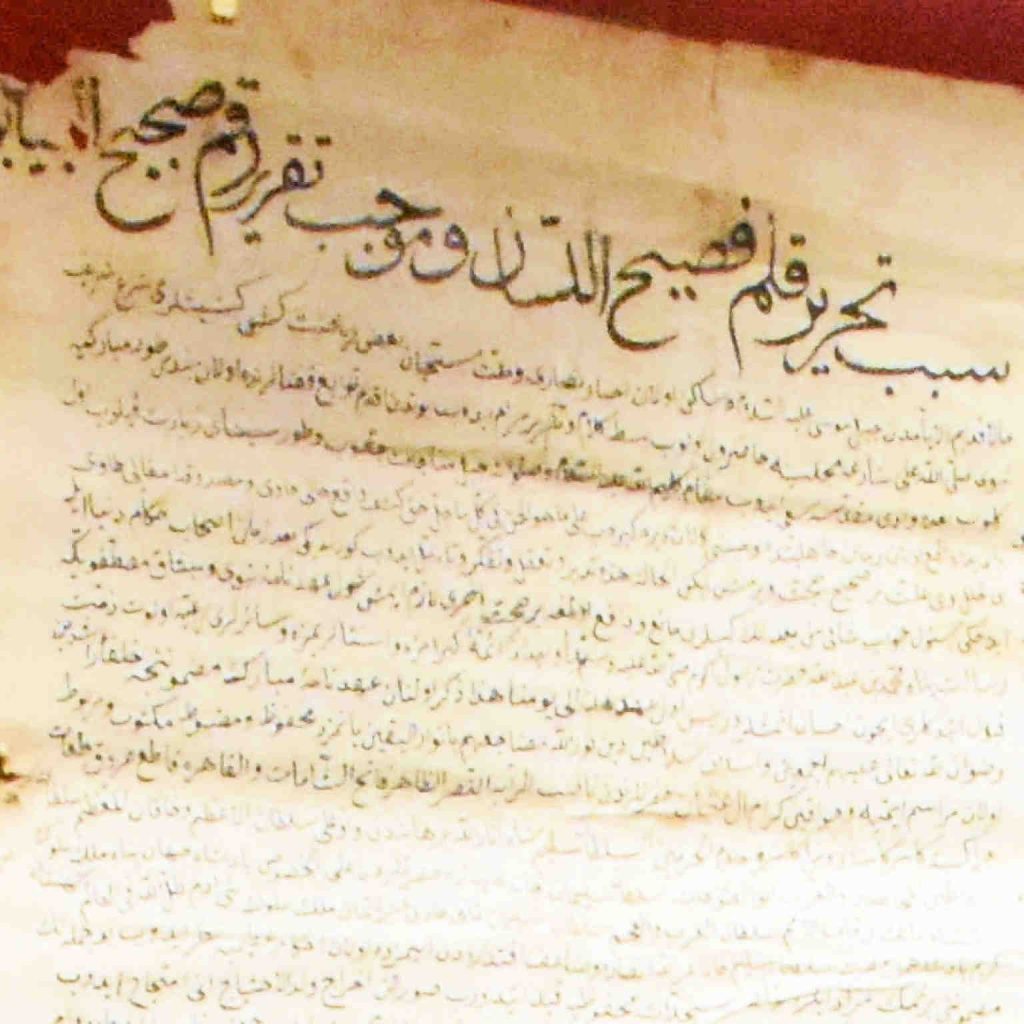
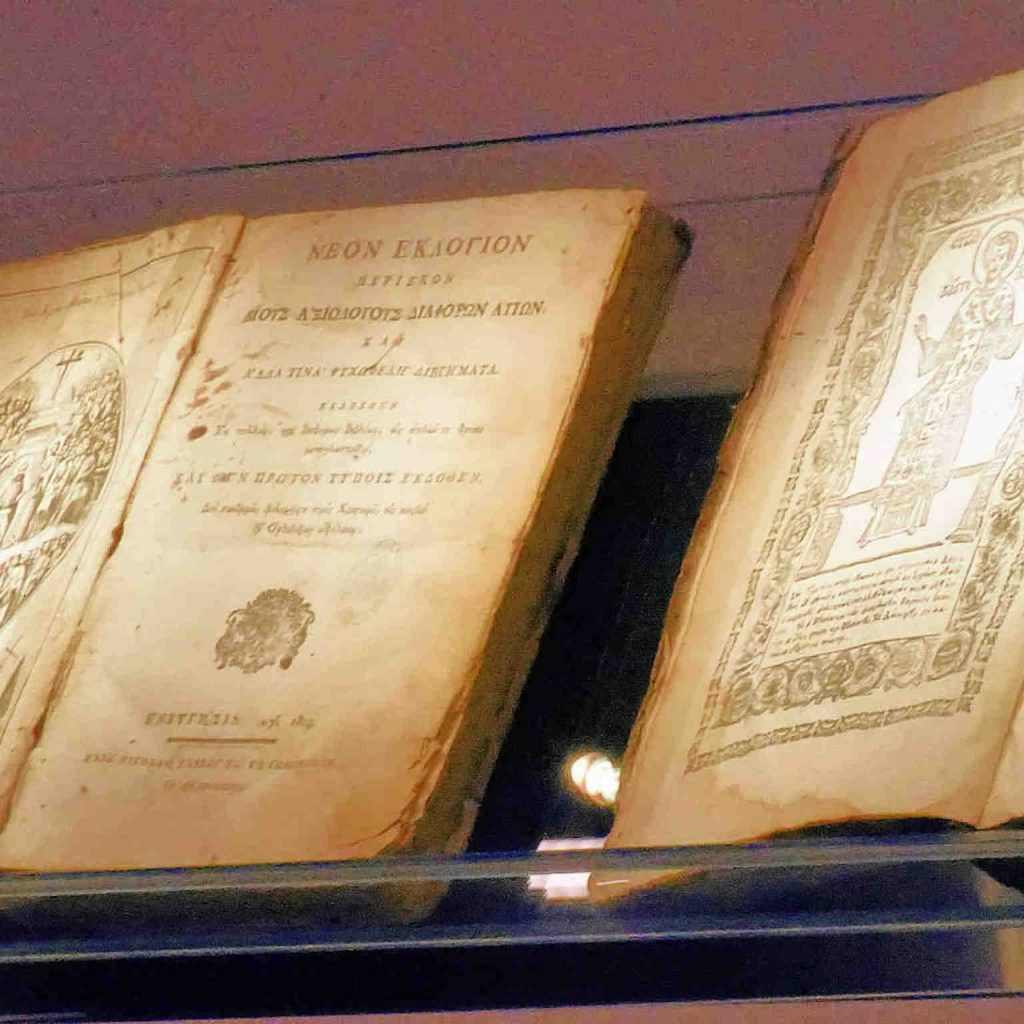
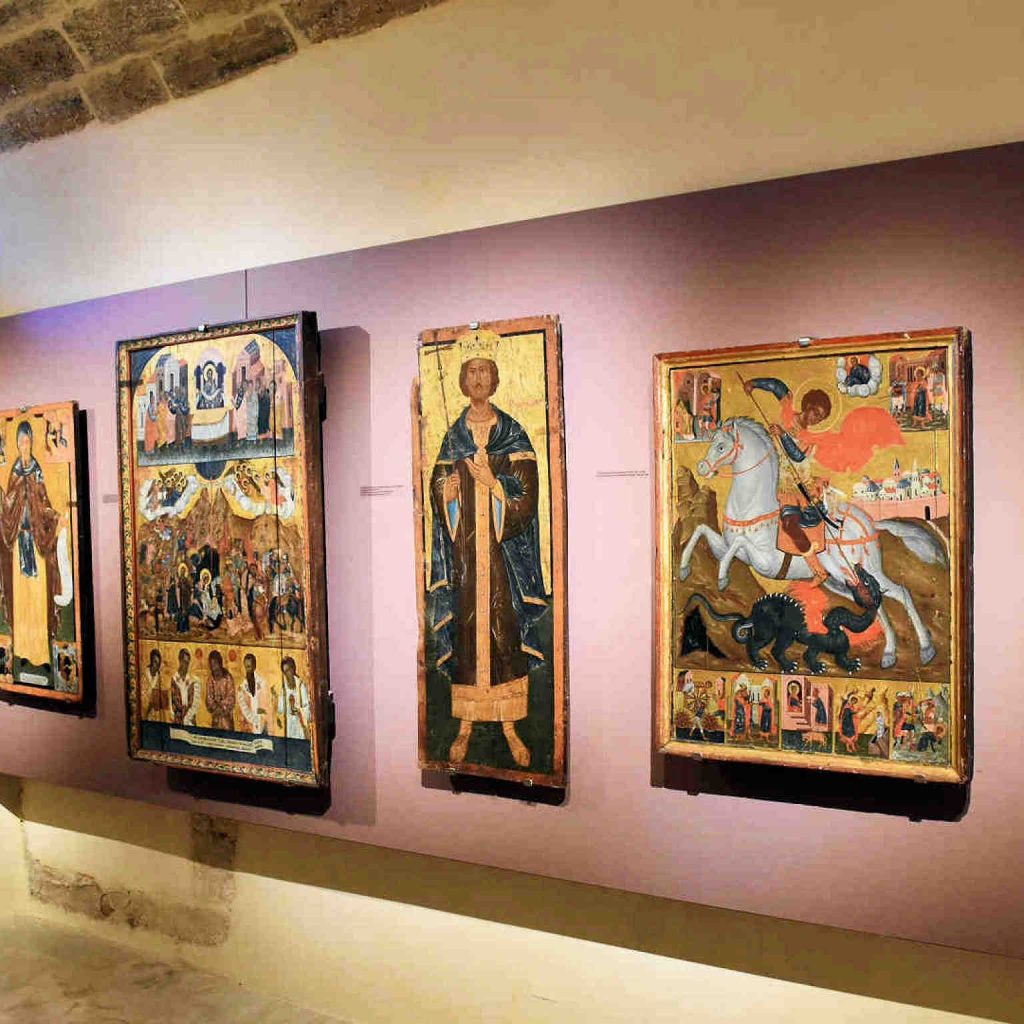
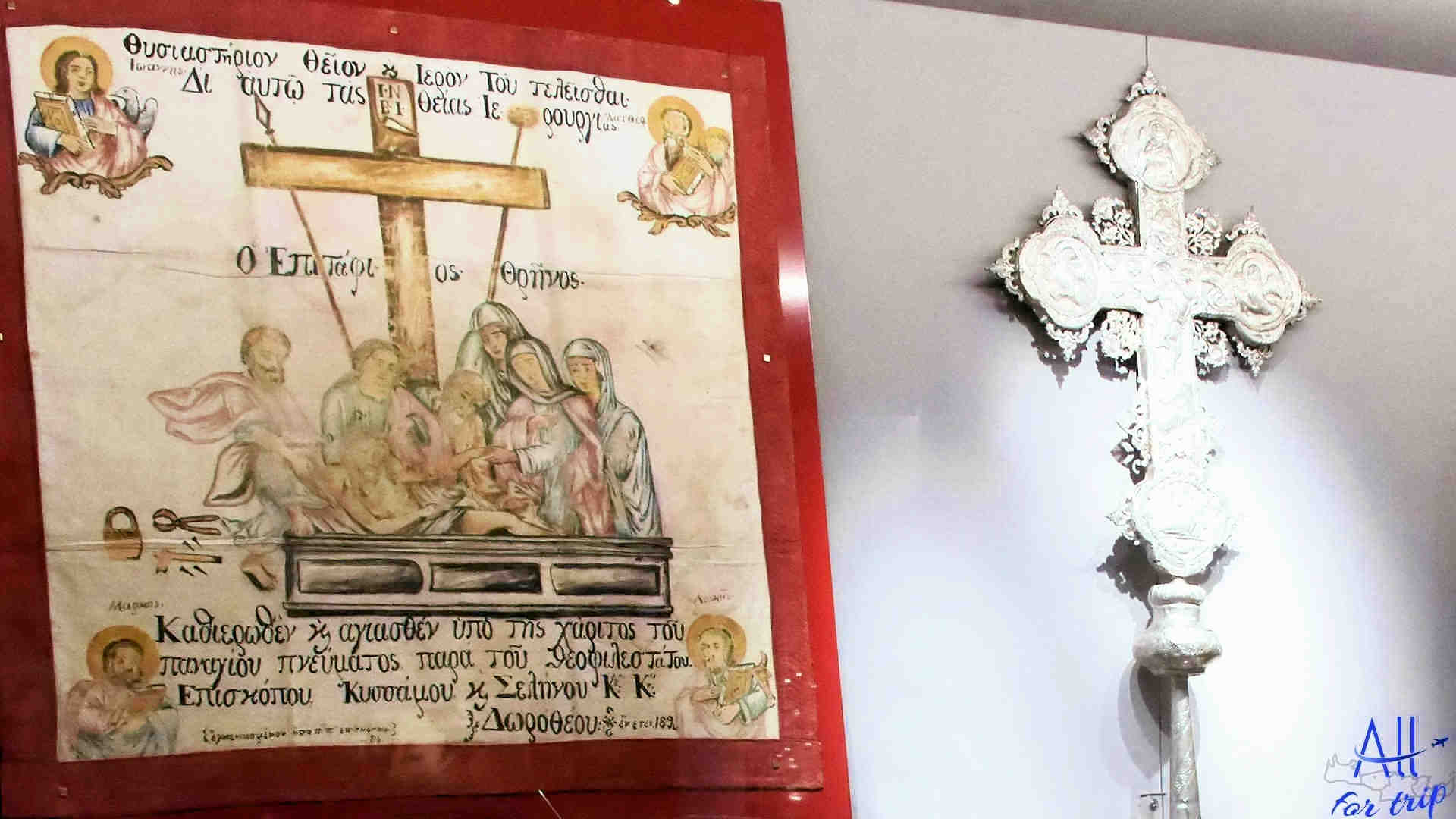
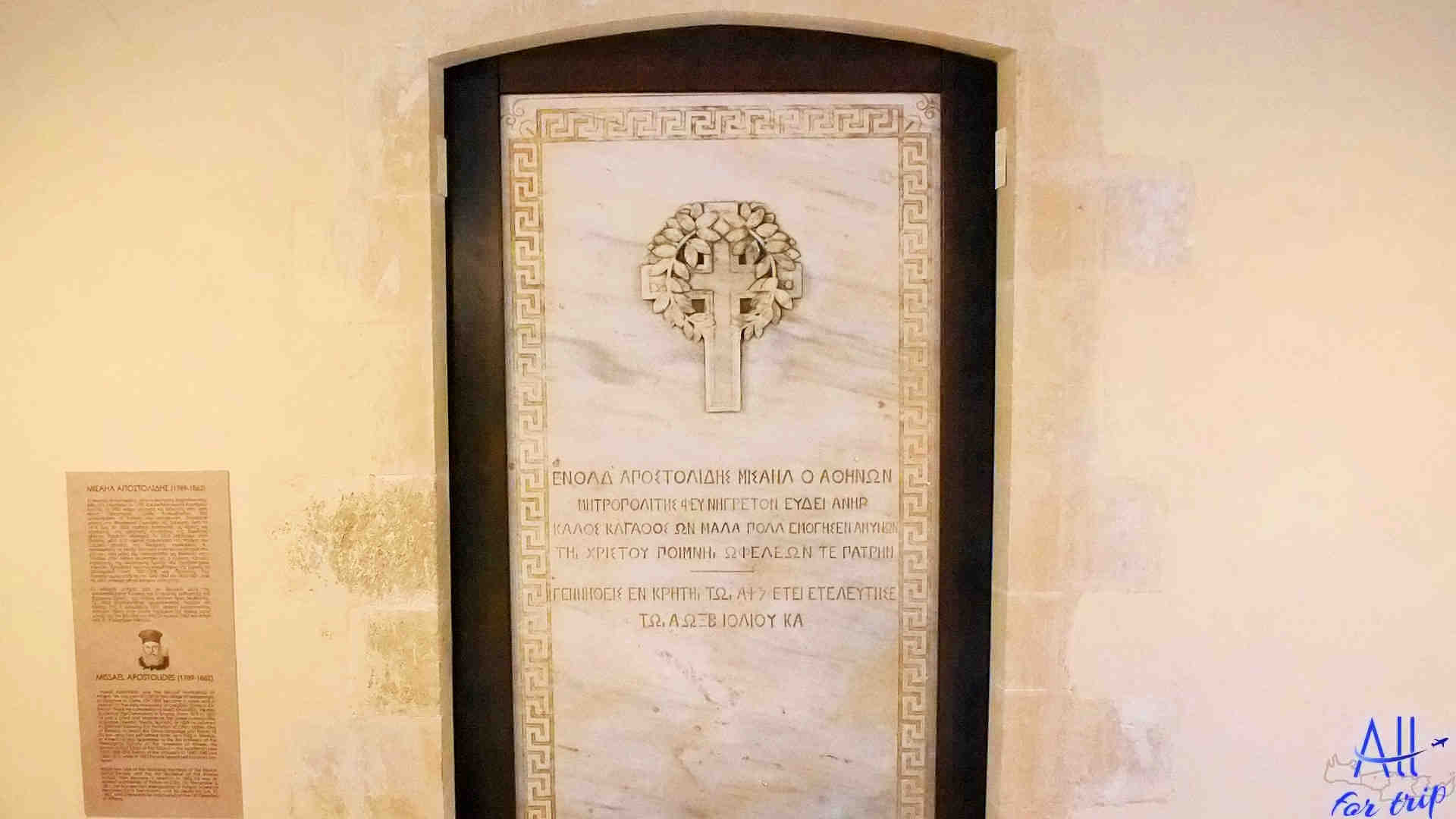
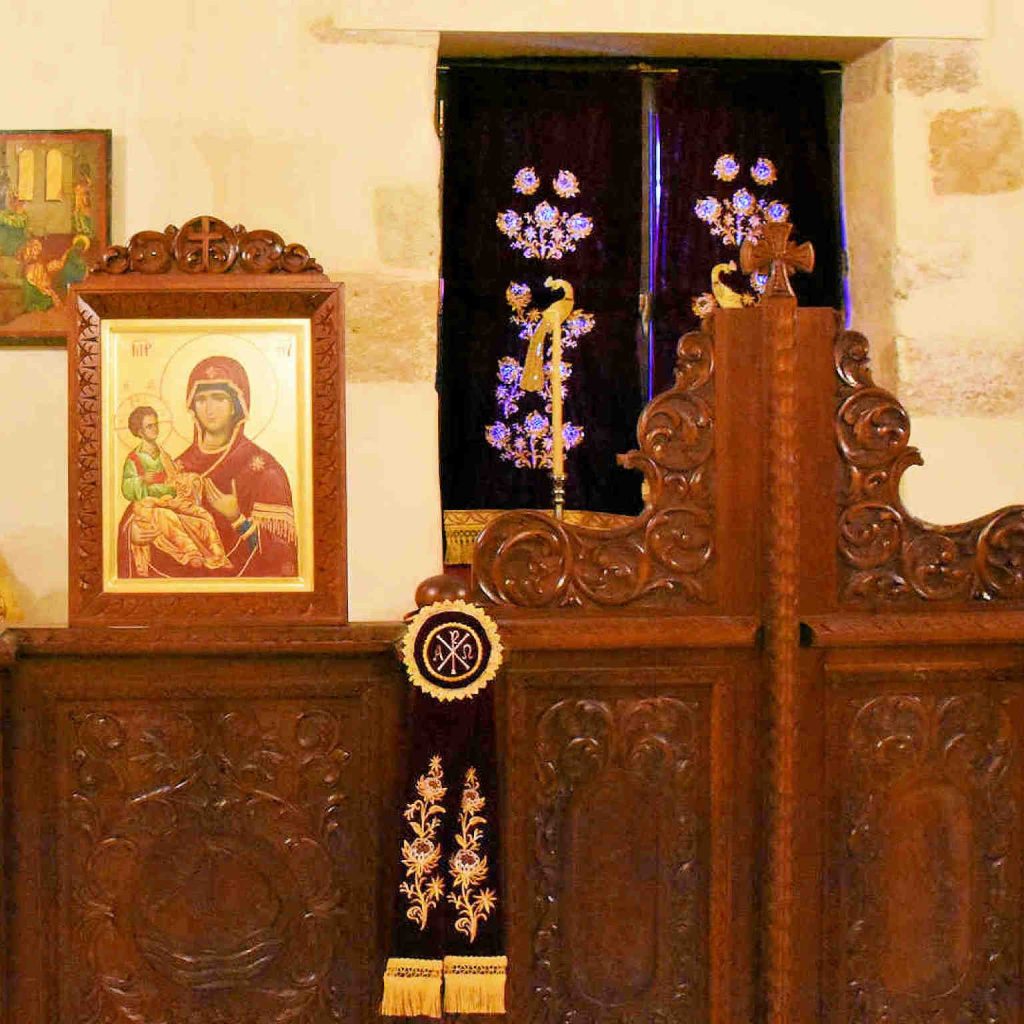
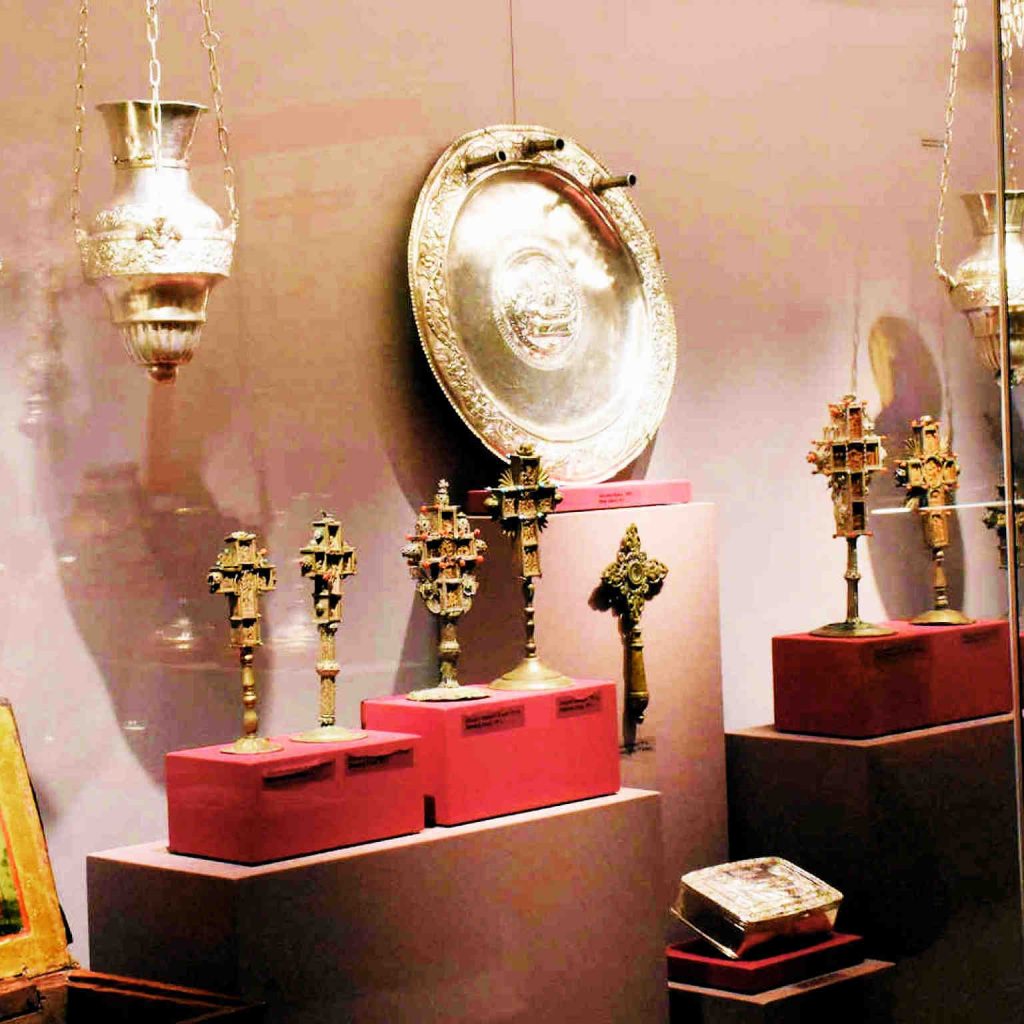
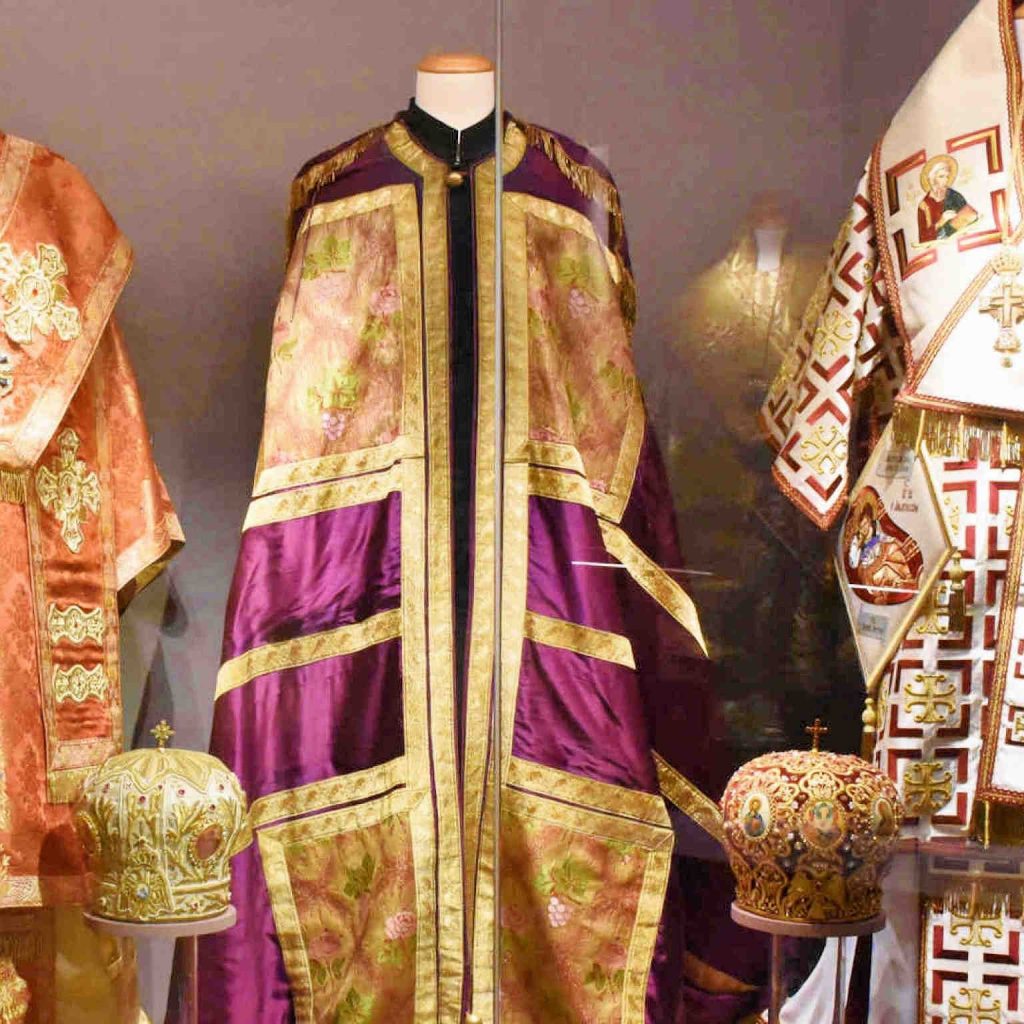
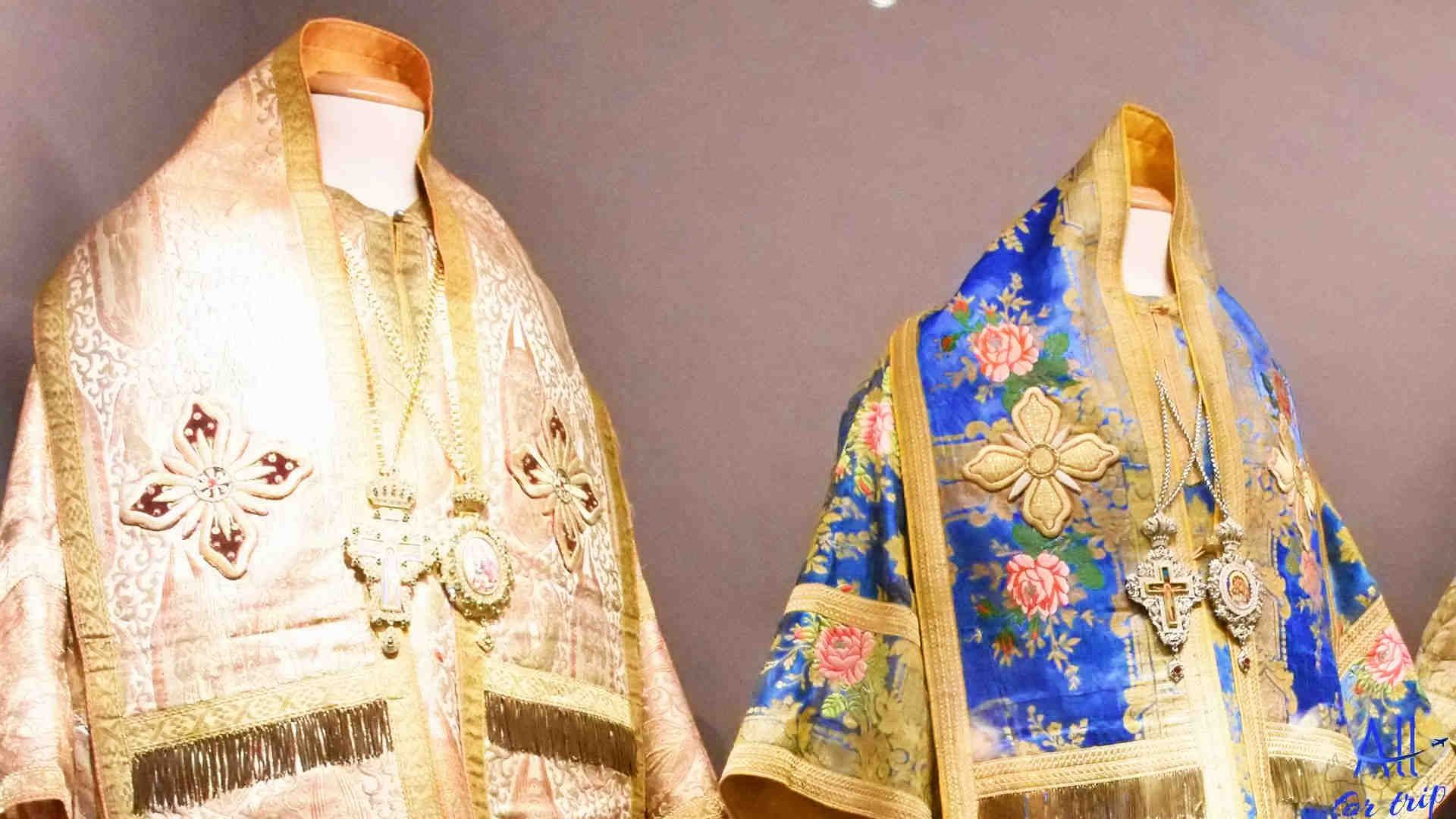
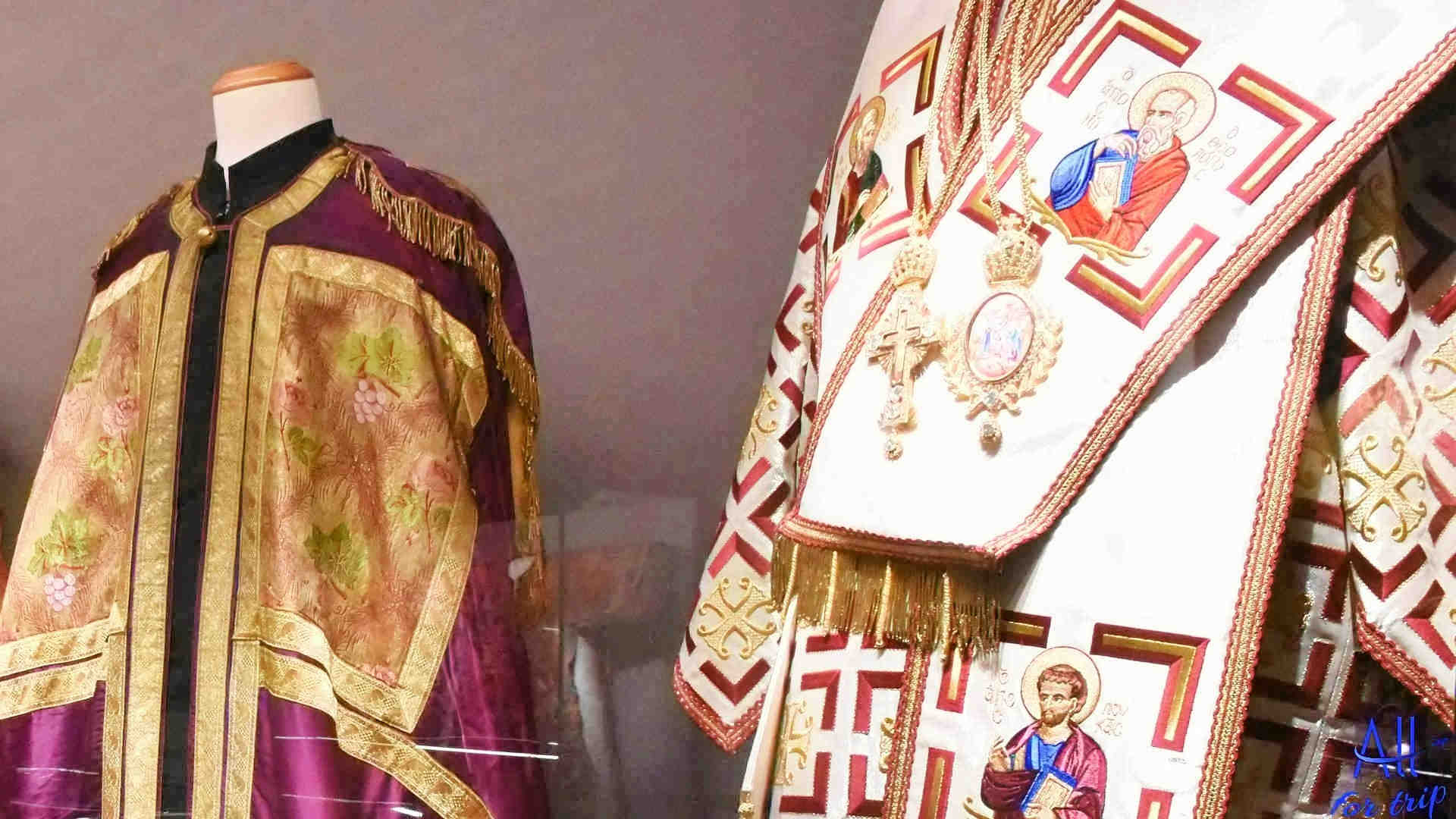
Inside the monastery is the Church Museum
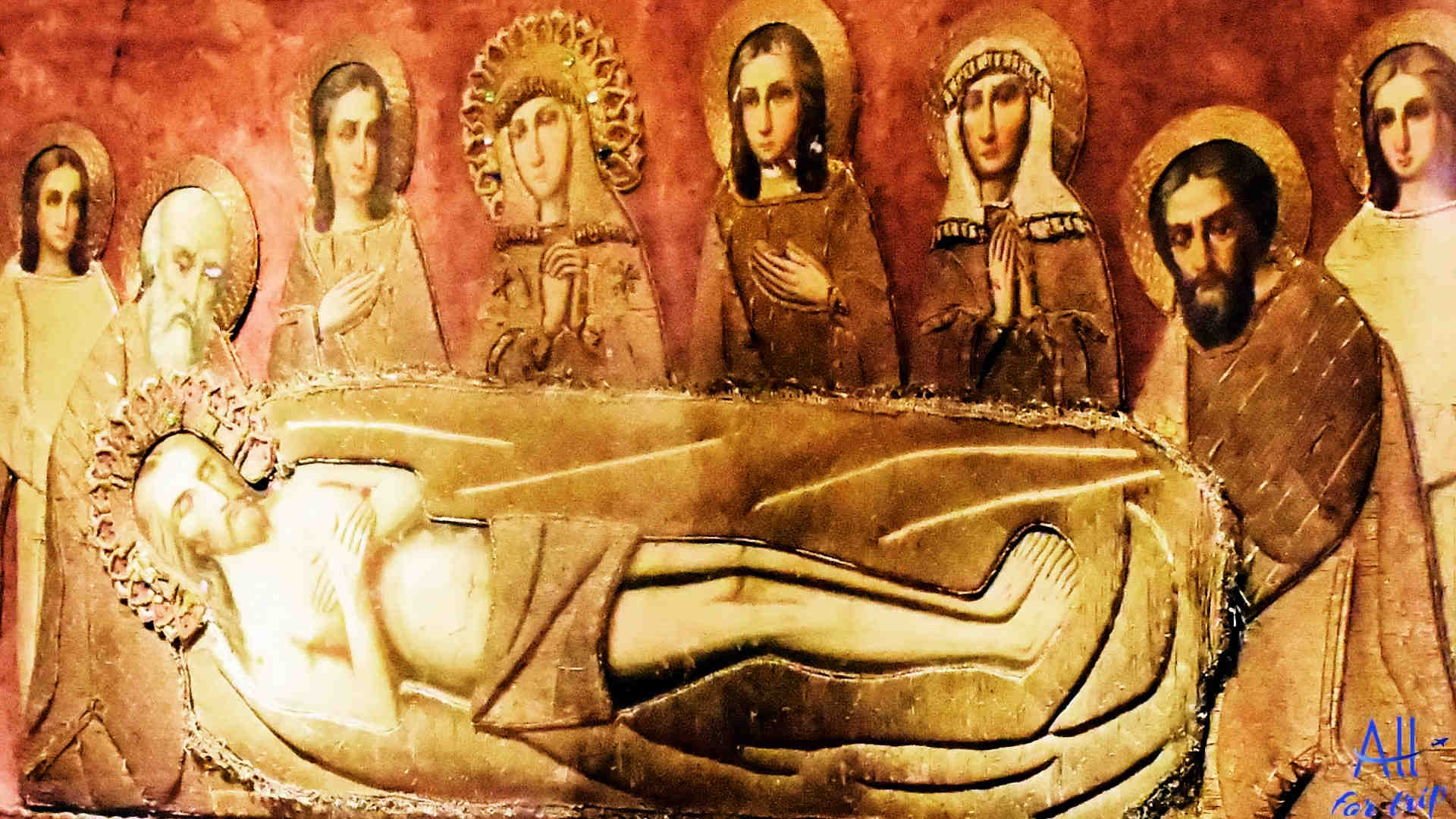
– collection of icons from the 14th century
– some very old icons (such these of Constantine Palaiokapas)
– icons made by Parthenios, Ritzos, and Neilos – 15th and 17th century- two old monastic codes: in which monks recorded in detail the history of the monastery
– manuscripts of several centuries
– sacred objects
– exhibition of church clothes
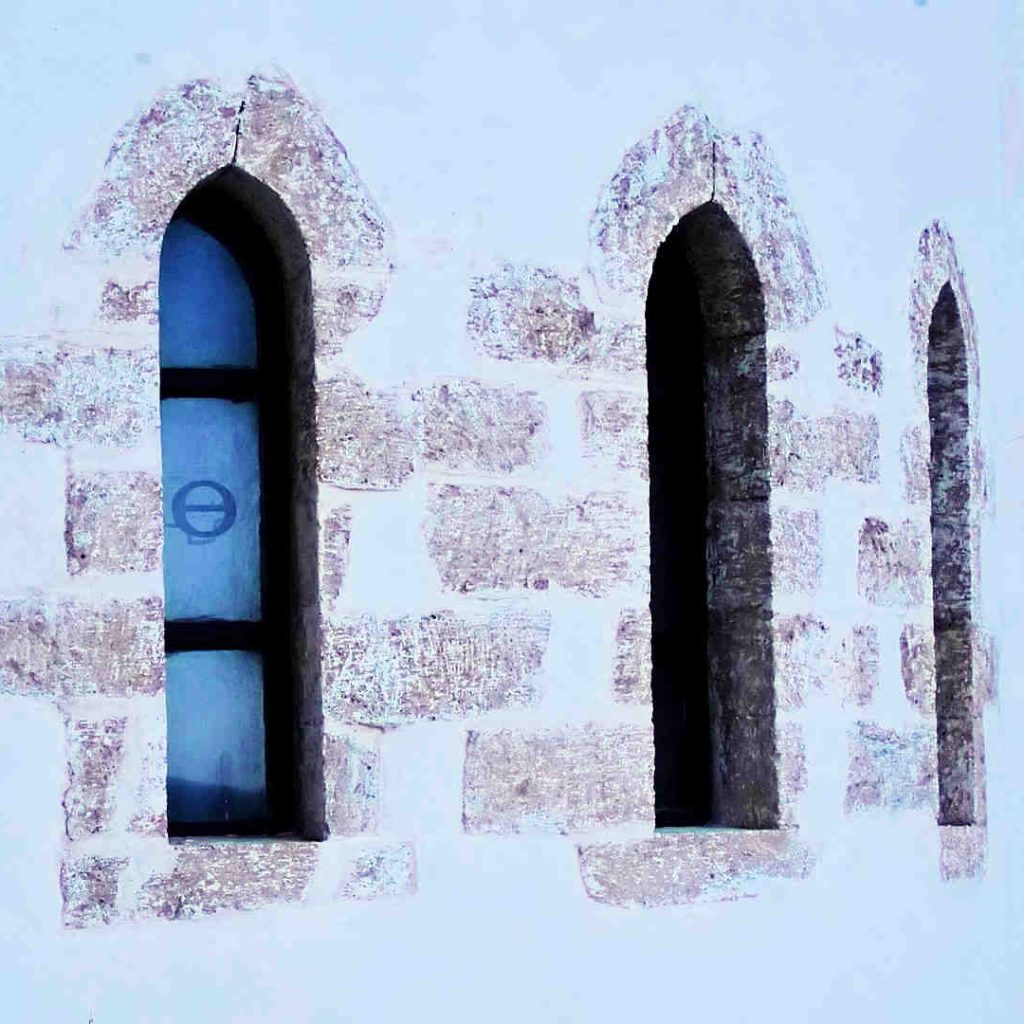
– there are several ancient inscriptions on the walls


Comment (0)